Jewish Life and Community
Jessica had an interesting journey in her Jewish life. She grew up in a Conservative Jewish household, to the best of our knowledge (she never really talked about it much). She lived in Mount Vernon, New York (just north of New York City) and the family visited her observant grandmother (who would not travel on Shabbat) in Brooklyn each weekend.
She did not have a Bat Mitzvah because at the time she was 12-13 (1949-1950), such rites of passage for girls were rare for girls.
Jessica's husband Michael was not at all religious, so she accepted the mantle of creating a Jewish home and attending to the Jewish education of Rachel and David.
United Hebrew
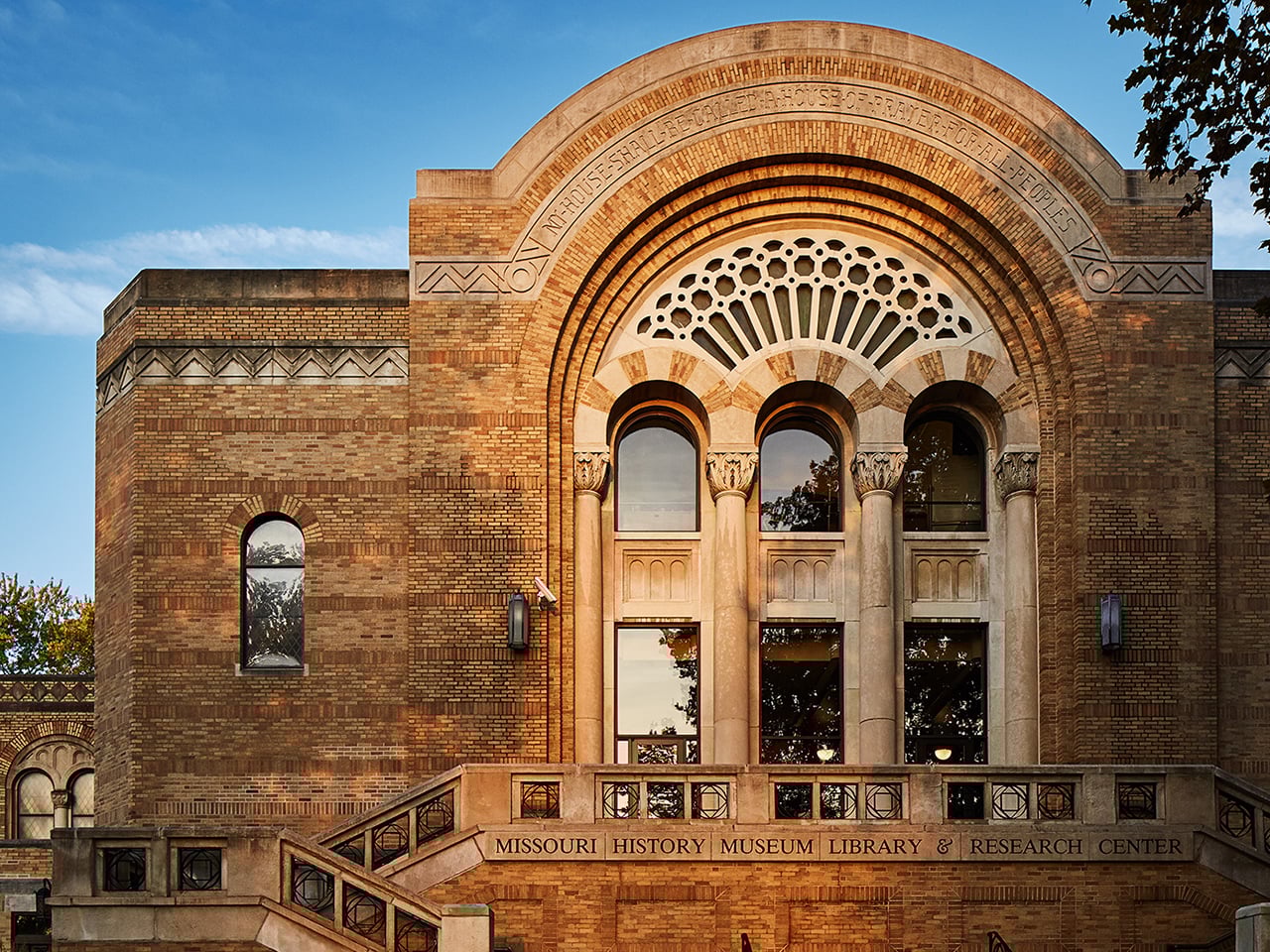
United Hebrew facade
Photo credit:
U.S. Green Building Council
So it came to be that our family joined United Hebrew Congregation, a Reform community, which described itself as "the oldest congregation west of the Mississippi (1837)."
Jessica specifically mentioned to us over the years that the reason she joined was that she admired that Rabbi Jerome Grollman had marched at Selma. An August 2008 obituary of Rabbi Grollman emphasized his extensive civil rights record and that he knew and had hosted Dr. Martin Luther King, Jr.

Dome of United Hebrew
Photo credit:
Wandering Jews website
United Hebrew followed the path of Jewish migration, starting in downtown St. Louis, then to the St. Louis City/St. Louis County border in the 1920s, then 13 miles west in the late 1980s. At the time we were members, it was 2.5 miles from home, in a magnificent building facing Forest Park (now the Missouri History Museum Library).
Over time, Jessica, Rachel, and David became significantly disenchanted with the religious school, and left United Hebrew around 1975 (after David's 5th grade year).
Hillel
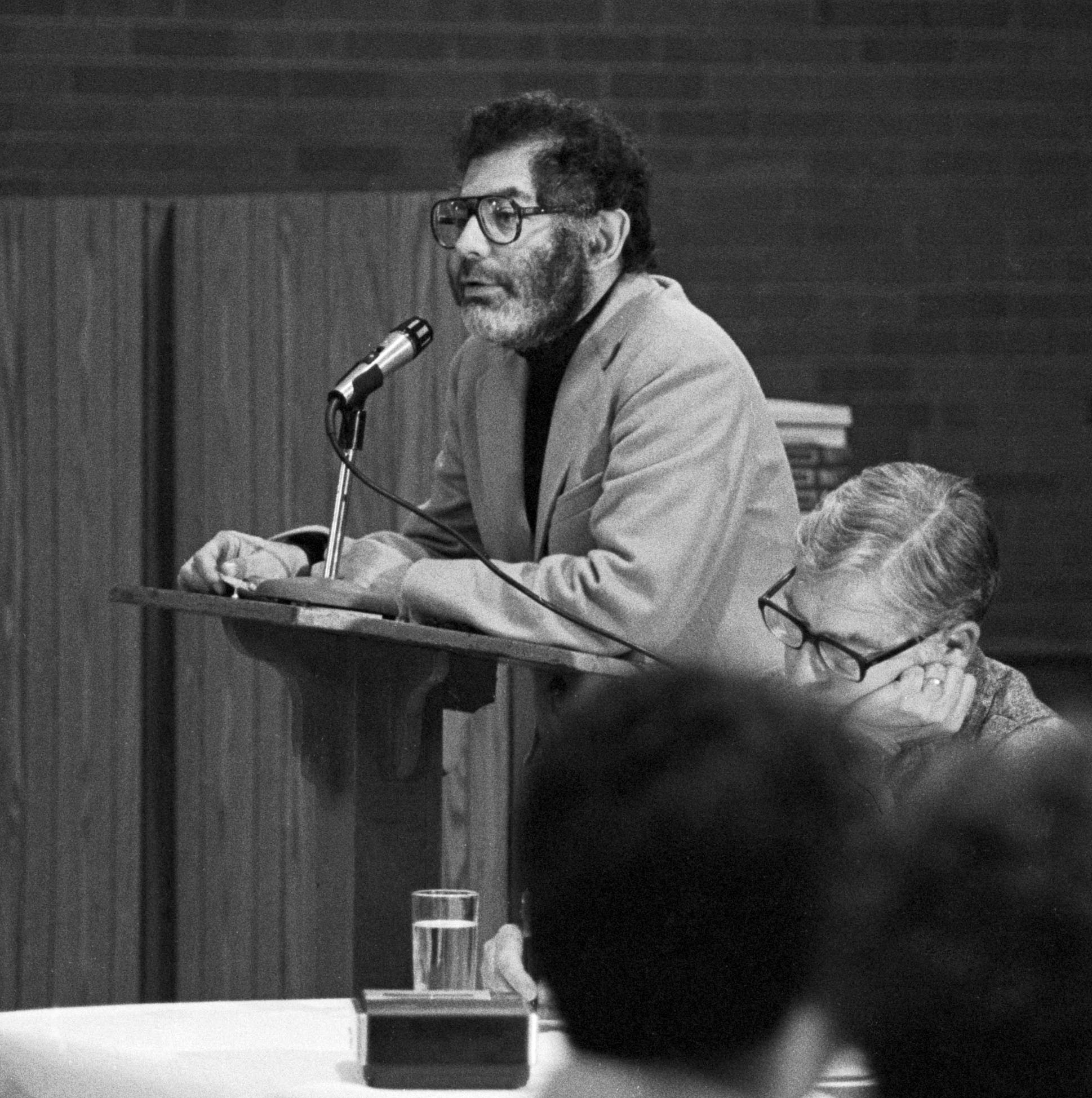
Sept. 1982: Rabbi Jim Diamond
Photo by David
By that fall, looking for a place at which to attend High Holiday (Rosh Hashanah and Yom Kippur) services, our family selected the Washington University Hillel, an option available to us due to Michael being a professor at the university. The holidays services attracted college students, of course (and grad students), but also a mixture of faculty, staff, and community people.
We all liked it sufficiently that we went back the following year (September 1976).
The upcoming academic year was the preparation year for David's Bar Mitzvah, to be held the following April (1977). In consultation with the Hillel Rabbi and Executive Director, Rabbi James Diamond, the decision was that the Bar Mitzvah would be held at Hillel itself. David's tutor urged David (and Jessica, who was not going to send her 12-year-old son there alone!) to attend services consistently. Thus, we became regulars at Saturday morning Shabbat services, alternately attending the Orthodox services (where men and women would sit separately with a mechitzah divider) and the "Egalitarian Minyan" (where men and women could sit together and participate equally in reading Torah and leading services).
[To add my own (David's) editorial comment, the April 23, 1977 Bar Mitzvah ceremony was special not only because lots of family came in from out of town, but because the college students who had seen me and helped me throughout the previous 7 months were rooting for me. That aspect was certainly emotionally rewarding for 13-year-old me, and I hope it was for them, too.]
The community there had been accepting of me, of my mom, Jessica, and of my sister, Rachel (then in 11th grade), who had attended off and on that year too.
Bais Abraham Congregation ("Bais Abe")
After my Bar Mitzvah, my wonderful tutor, Judah Levine, had suggested that we might want to continue attending services and specifically that we might try the small Orthodox synagogue north of campus, Bais Abraham Congregation.
And so it was that Jessica came to be part of the Bais Abe community, from the spring of 1977 for 48 years until her death in March 2025 (even though she herself was never Orthodox).
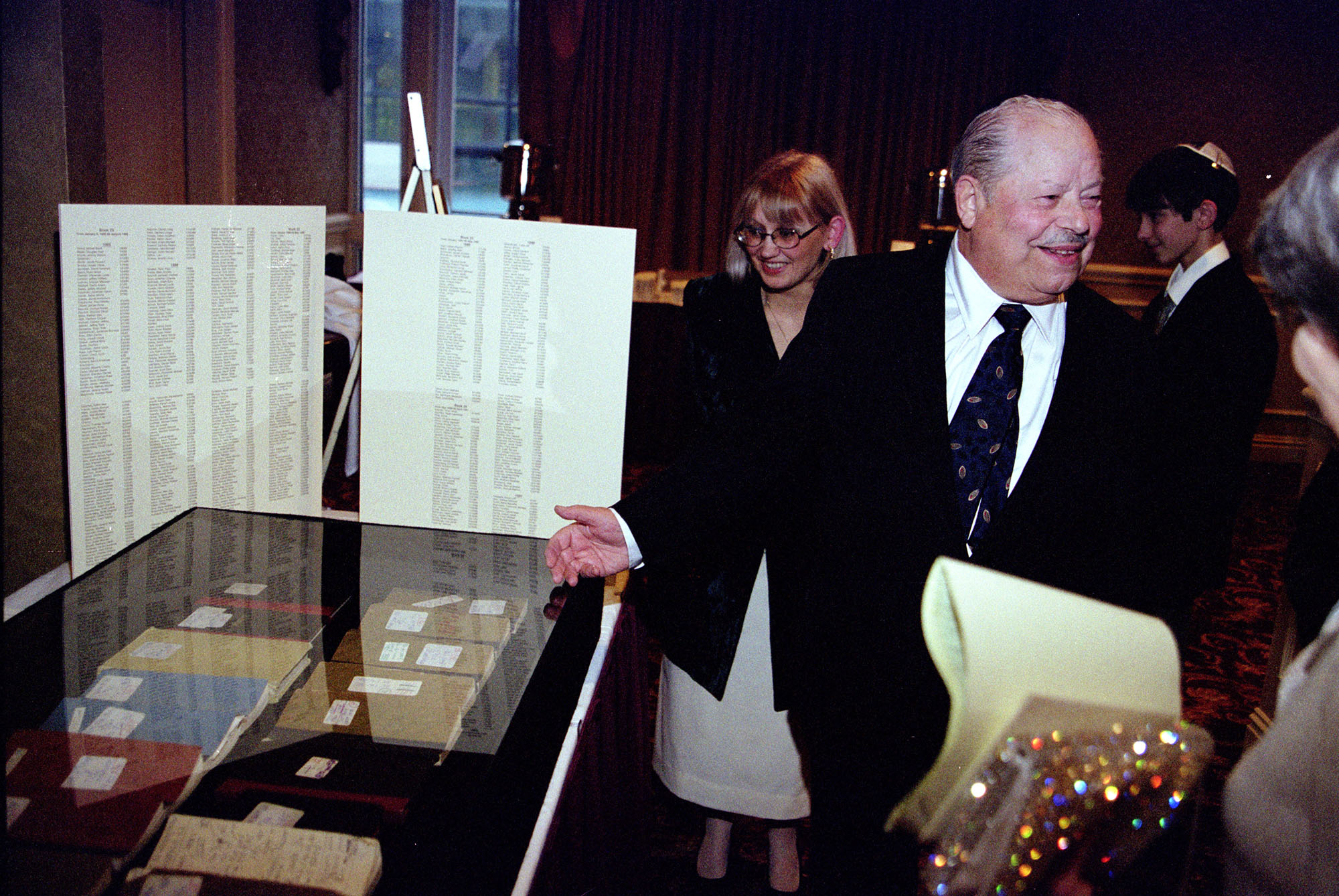
Feb. 2001: Rabbi Magence with
notebooks for 2500 brit milah
Photo by David
Bais Abe was led then by Rabbi Abraham Magence, a legendary figure in the St. Louis Jewish Community, a Holocaust survivor who spoke 6 languages and welcomed people of many stripes and backgrounds. (At Saturday morning services, he would announce page numbers simultaneously from three different prayer books, in English, Russian, and Yiddish.)
Music at Bais Abe
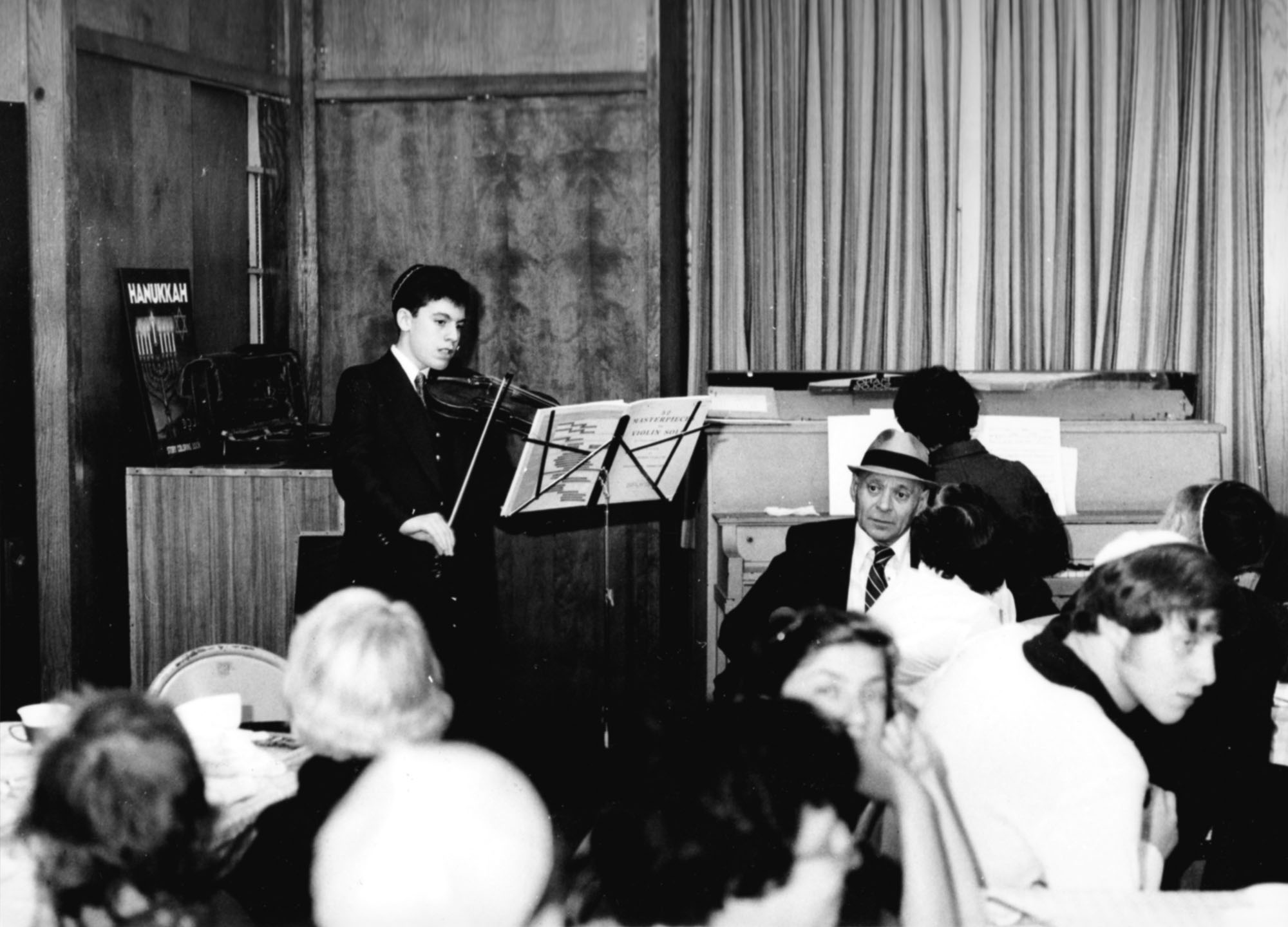
1978: David and Jessica perform at Bais Abe.
In 1978 Jessica and David (age 14) were asked to play a concert at Bais Abe. Jessica's mother, Belle Kramer, had a
large collection of sheet music from the 1920s of popular songs. David and Jessica played a selection of
these (as sing-alongs, if I recall correctly). (The Bais Abe population at the time skewed older, with many Holocaust survivors.)
The program for the concert is found here (with words to many of the songs).
In the photo shown here, Belle is the white head with a black sweater at the table in the left foreground, while David and Jessica play.
Photo credit: © 1978 Dr. Bernie Silver (opthamalogist, family friend, and excellent photographer)
Women's Tefilah Group at Bais Abe
Jessica was one of the founding members of the Women's Tefilah Group at Bais Abraham. "Tefilah" means "prayer," but calling it a "prayer group" does not adequately explain its role. In an Orthodox community, women are not allowed to participate in leading the regular service at all. Thus, this group met in the social hall, below the main sanctuary, for their once-per-month services. It was a women-only affair, and they did all the parts they could not do otherwise: chanting from the Torah and Haftarah, leading the services, delivering sermons. It was a collective endeavor, and they were enormously supportive of one another, encouraging and tutoring each other to learn to lead in Hebrew.
This was part of a national movement for Women's Tefilah Groups, as decribed in this Jewish Women's Archive article.
Adult Bat Mitzvah, age 13+50
Jessica studied with a friend, Judy Hoffman, and eventually had her own long-delayed and long wished-for Bat Mitzvah in May of 2000, at age 63 ("50 years late," as she descibed it). Her brief remarks are found here.

Mother of the Year
And in January 2008, the Bais Abe Women's Tefilah Group named her "Mother of the Year." Among her papers we found her notes/remarks for that day, too.
Kallah Torah award
Also, in October 2014 (Simchat Torah 5775), Jessica was chosen for the Kallah Torah (literally, "bride of the Torah") award from Bais Abe, which was recognized at a Women's Tefilah Group service.
Key Aspects of the Award:
Click the triangle for the "Kallah Torah" definition from the
"Google AI Preview" in December 2025
A "Kallah Torah" (or "Chatan/Kallah Torah") award is
a prestigious honor in some Jewish communities, given to individuals for outstanding community service, leadership, good deeds, or dedication to Torah values, often presented during the Simchat Torah holiday when the Torah cycle concludes and restarts. It's a recognition of a person's significant contributions, embodying the spirit of hachnasat kallah (welcoming the bride) by uplifting the community, and it can be awarded to both men (Chatan) and women (Kallah).
Examples:
She described it in an October 17, 2014 email to Rachel and Neil, David and Sheryl:
Dear Family, I have something very nice to describe. I received a Kallah Torah award this morning from the Women's Tefillah Group. They recognize one woman each year, and I was chosen this year. It involved kind words from my friends, Phyllis Shapiro and Fawn Chapel, a response from me which I had dashed off late one night, then a long, long misheberach wishing me every good thing, chanted (in Hebrew) by another friend, Judy Hoffman, followed by an aliyah for me before the last section of Devarim was read, by Phyllis Shapiro. It was quite overwhelming.Her 2014 remarks, referenced above can be found here.Padre suggested, after I read my remarks to him when I arrived home, that I send them to you, & I have attached the 2 pages here.
The only thing that was missing was that you, Rachel and Sheryl, could not be present.
In any case, it is lovely to be able to share something very nice!
Much love,
Madre
Gardening at Bais Abe
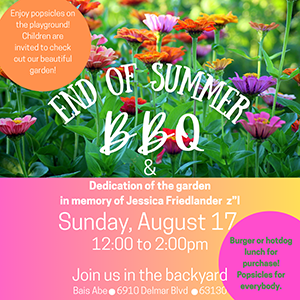
This is more fully discussed on the page dedicated to her gardening, but around 2005 she decided to share her skills and expertise to significantly spruce up the landscaping around the entrance to the synagogue. (Being a small synagogue, members pitched in for all sorts of tasks for the congregation.) In consultation with a few gardening expert friends as well as other members of Bais Abe, she researched different plants and flowers which would thrive there, what existing plants needed to be ripped out, and executed her plan, with assistance from others. She maintained this front garden for a decade or so, until 2015.
In August 2025, five months after her death, Bais Abe honored her memory with a ceremony and a plaque, dedicating their side garden to her. Rachel and David & Sheryl, plus grandsons Noah, Jonathan, and Rafael all came to St. Louis for this honor for Jessica.
Classes
Over the years, she studied with a series of rabbis there, her Tuesday mornings set aside for Torah or other classes. Even up through December 2021 to December 2022, she participated in a Zoom class on The Prophets (Isaiah, Jeremiah, etc.), taught by Stewart Shilcrat, a knowledgeable lay leader from Bais Abe.
And a final Bais Abe story
And a final remarkable note from March 2025: an experience at Bais Abe on the Saturday following Jessica's funeral.
Temple Israel Nursery School
Jessica was also centrally involved with the Temple Israel Nursery School, part of a large Reform congregation five miles west of her home for 17 years. She began as the music teacher and an assistant teacher in 1970-1971, then rose to be lead teacher within a year. After eight years, she became director in summer 1978, and remained there until the summer of 1987.During her entire time there she brought in all sorts of Jewish content, both as a music specialist and for the general classrom curriculum, in terms of learning about Jewish holidays throughout the year and more.
More information about TINS can be found on the Teaching page on this site.
Hillel Board of Directors
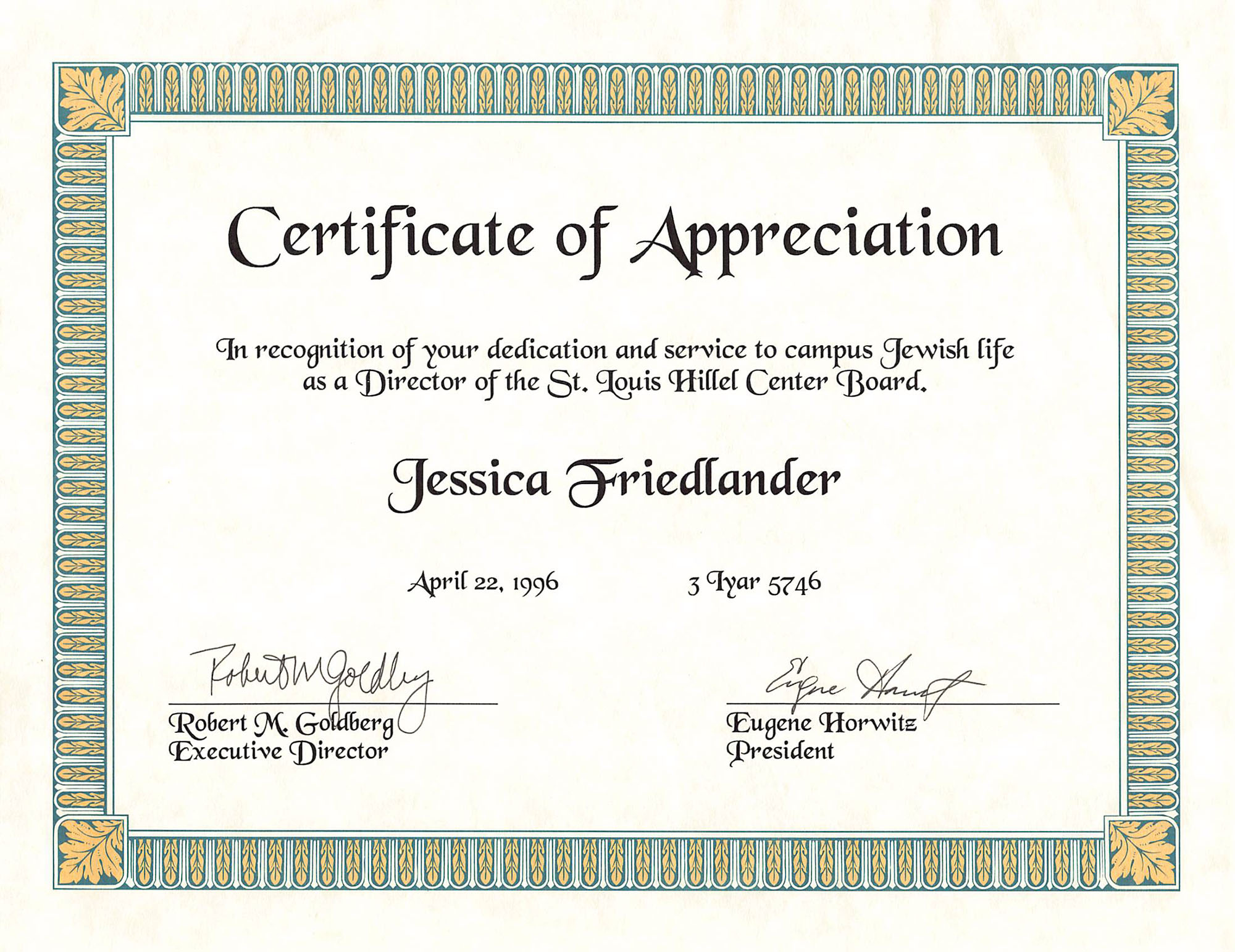
May 1996: Hillel Board
certificate of appreciation
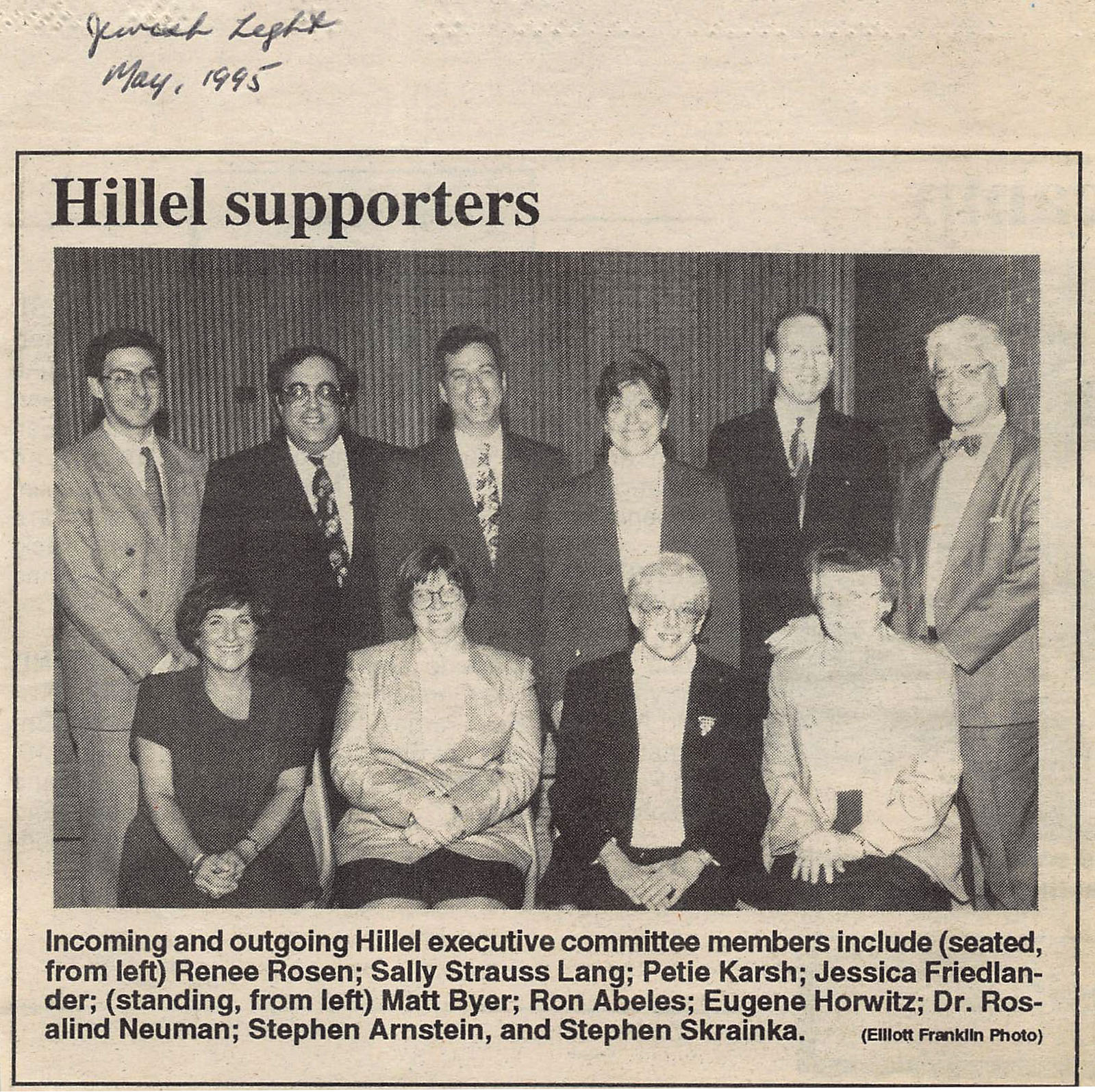
May 1995: Hillel Board Members
During her years of attending services and other programs at Hillel, she had gotten to know many people there, and Rabbi Diamond became a good friend. She was approached several times asking her to join the Hillel Board, but she declined while Rachel (1978-1982) and David (1982-1986) were college students at Washington U. and active in different ways at Hillel. But after David graduated, she did indeed join the Board, and served there for a decade (1986-1996).
At Home
In addition to all the Jewish community items cited above, Jessica and Michael hosted Passover Seders and Rosh Hahshanah meals for decades, oftentimes welcoming stray Washington University students (or, in some years, college friends of Rachel's or David's), new Russian immigrants, and friends. It was always particularly meaningful to be able to explain the holidays to the Russians and for them to participate, having not been allowed to do so in their native country. Jessica not only did all the cooking, but she was the one to lead the Seders as well.
The Gatesworth
2023: Jessica playing Maoz Tzur (Rock of Ages) for a Hanukkah celebration at the Gatesworth
After Jessica moved to the Gatesworth in December 2022, she found a Jewish community there, too. A year later, she played various songs to accompany their Hanukkah celebration. (The piano, located in the beautiful atrium, was unfortunately about 50 feet away from the menorah, candles, and the assembled people near the fireplace.)