Music
A sampling of Jessica's musical performances
Music was completely central to Jessica's life, across decades.
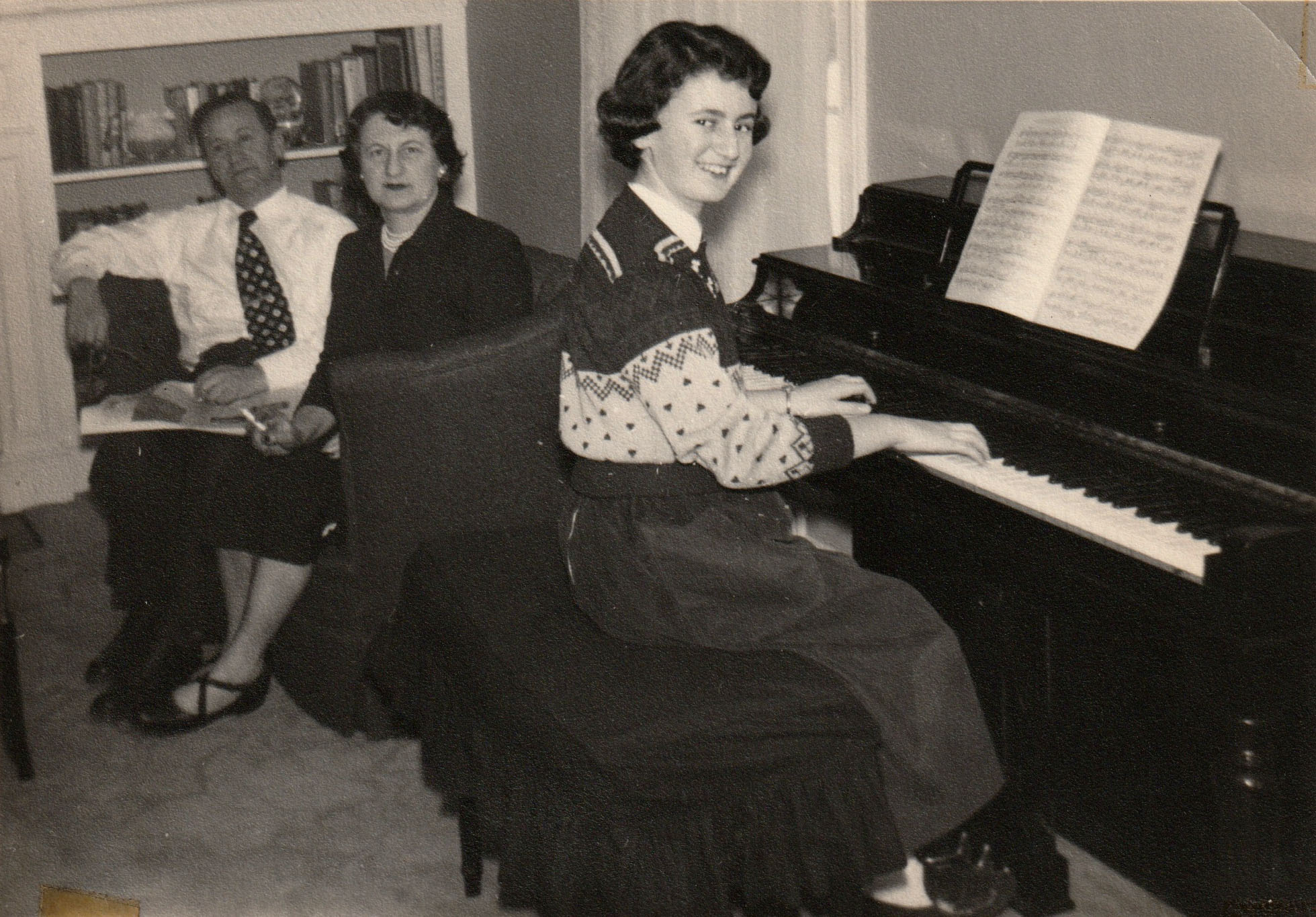
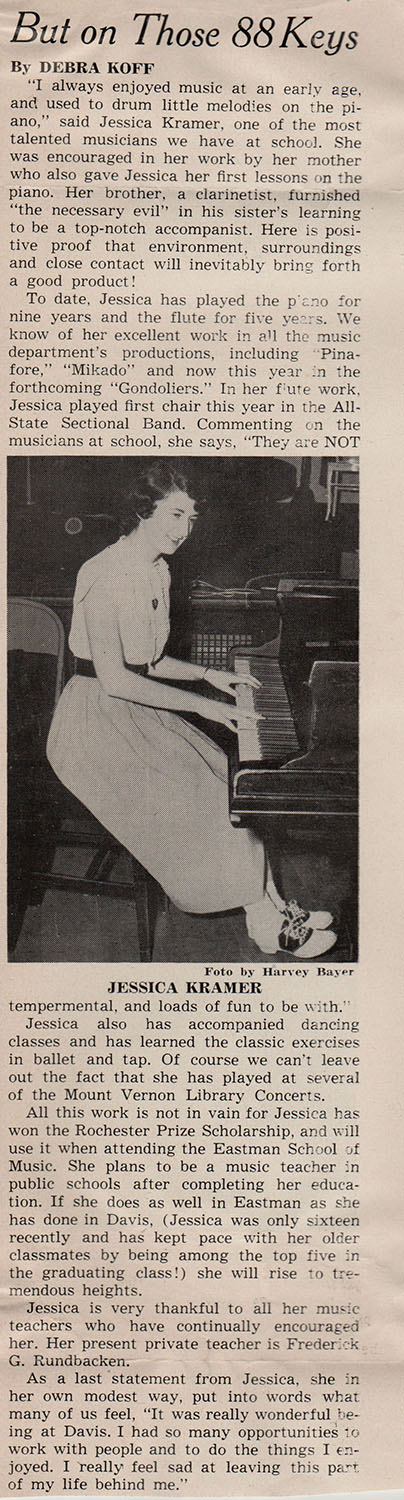
She had described to Sheryl that she learned to read music when her mother (Belle) would place a staff of notes propped up in the kitchen, while young Jessica helped her wash dishes. She also studied piano with Belle for several years. From about the age of 6 through grade 9, she studied with Sylvia Shapiro, and then with Frederick Rundbaken during high school (see photo below).
She had perfect pitch, something she inherited from her mother, and passed down genetically to her grandson, Noah. (Noah's mother Sheryl also has perfect pitch.)
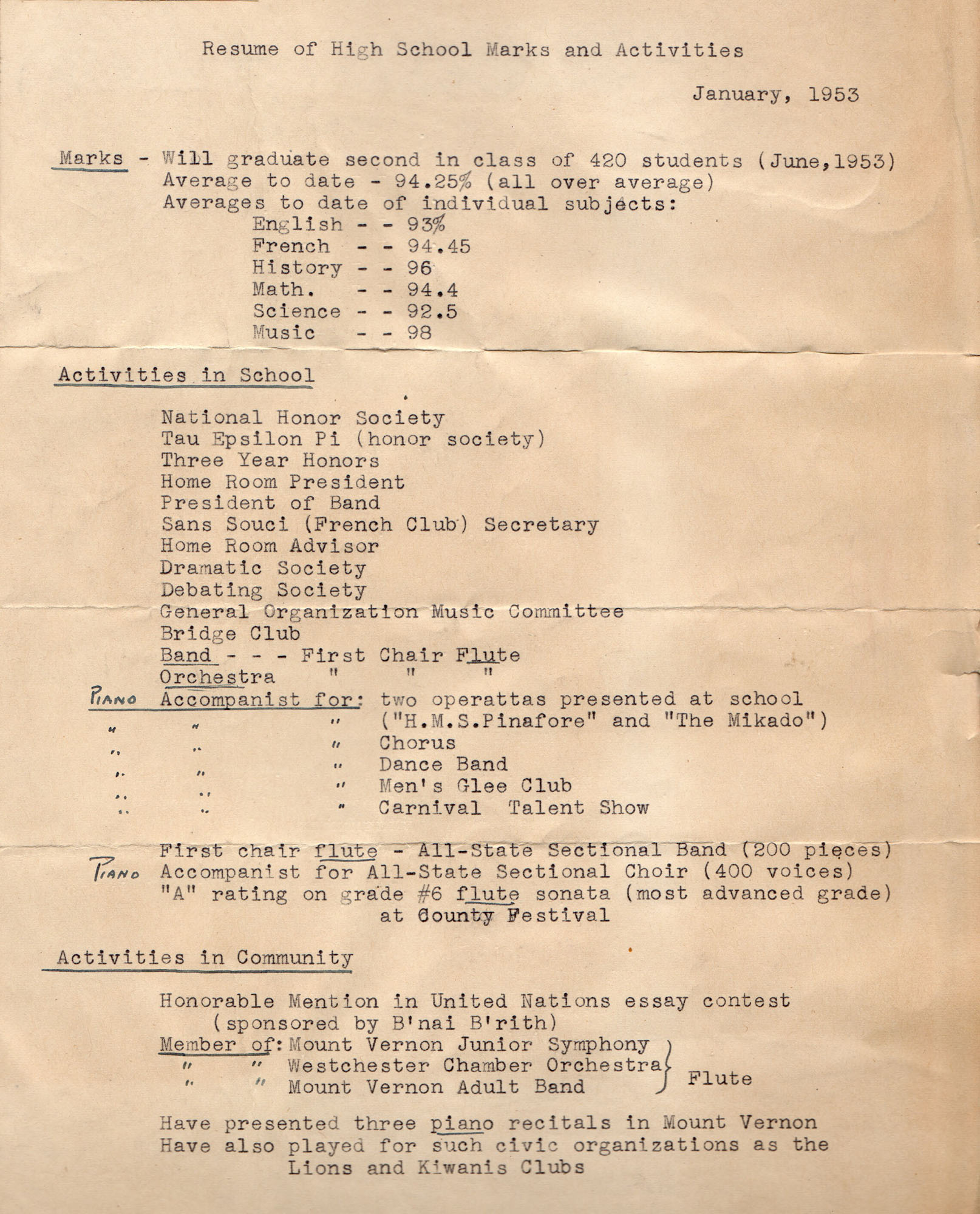
She performed regularly as a teenager, getting the opportunity to play in recitals, accompany others, perform as a member of bands and orchestras, and more. In high school, she was a part of many different musical organizations, as both a flutist and pianist.
Some examples of her musical activities are shown below.
We recently ran across a ten-inch vinyl record made on July 4, 1947 of Jessica (age 10½) playing piano, and being introduced by someone with a true radio voice (and clearly someone who did not know her), in which she gives her name and the date, and the piece she is about to play. The latter is rather garbled, perhaps a Waltz in E-flat? But who is the composer she names? "de Rain???"
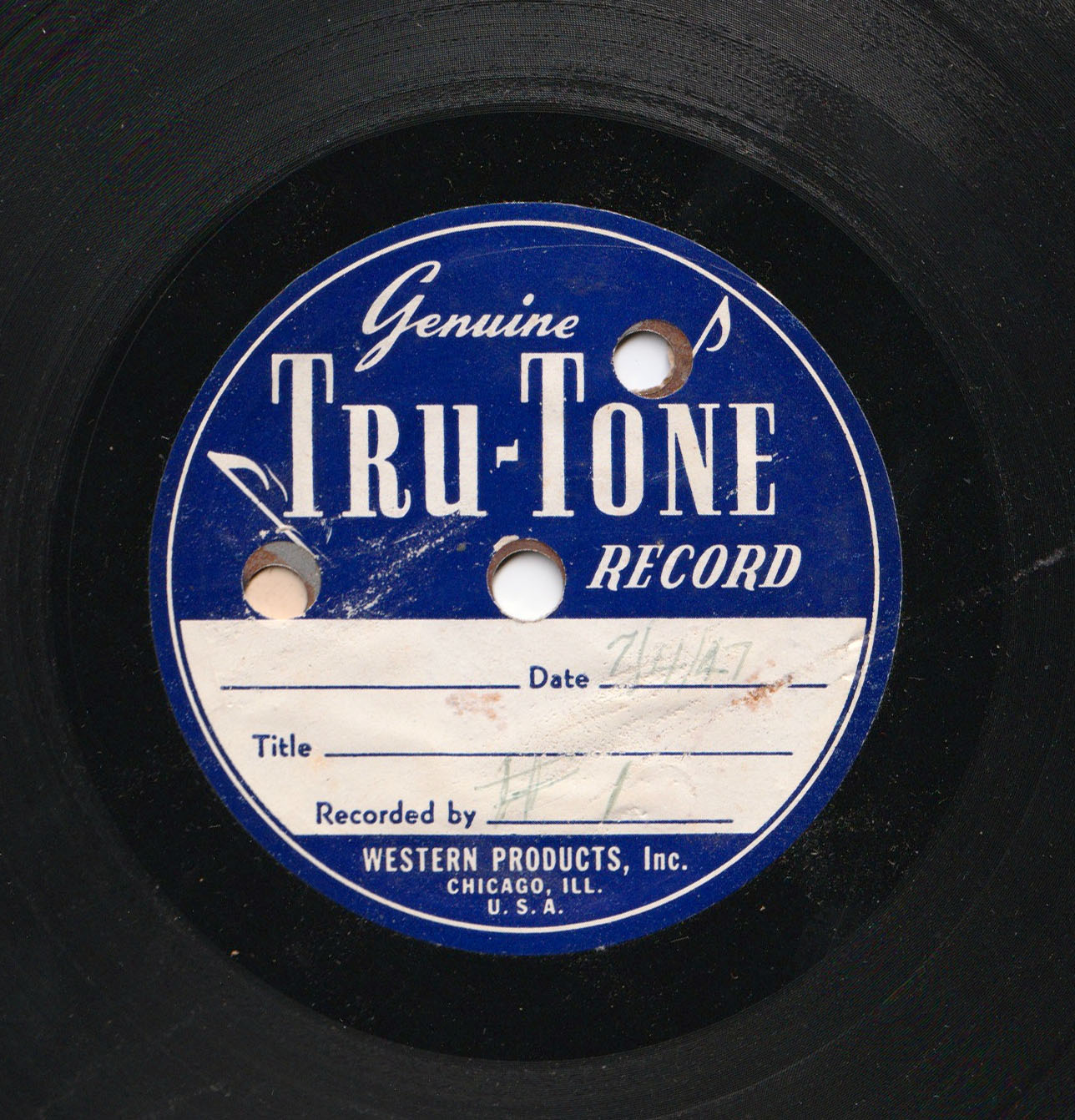
This is Side 1 (3½ minutes) of four (two records). Side 2 was skipping so much it could not be digitized, and we have not attempted to digitize the second disk yet.
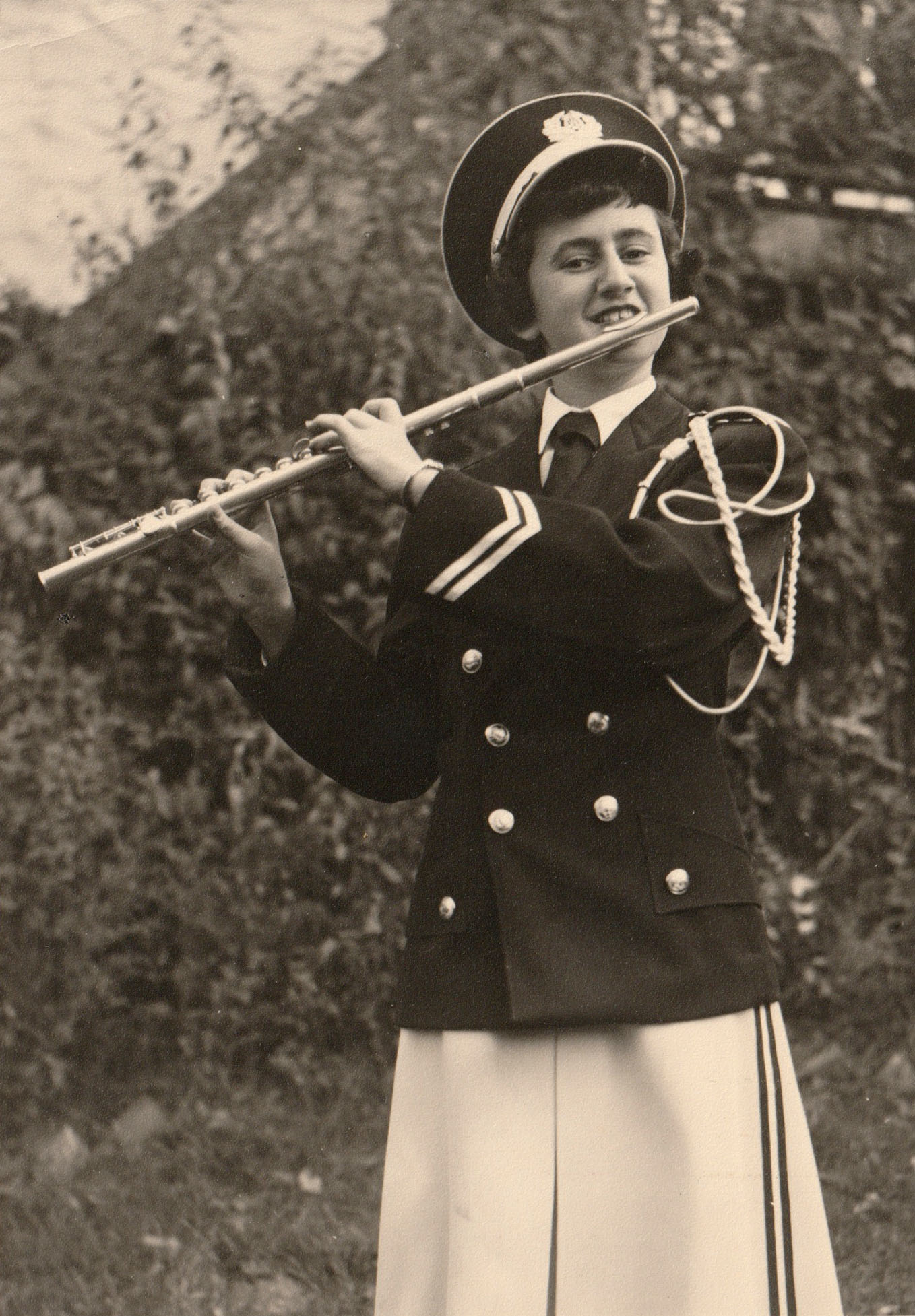
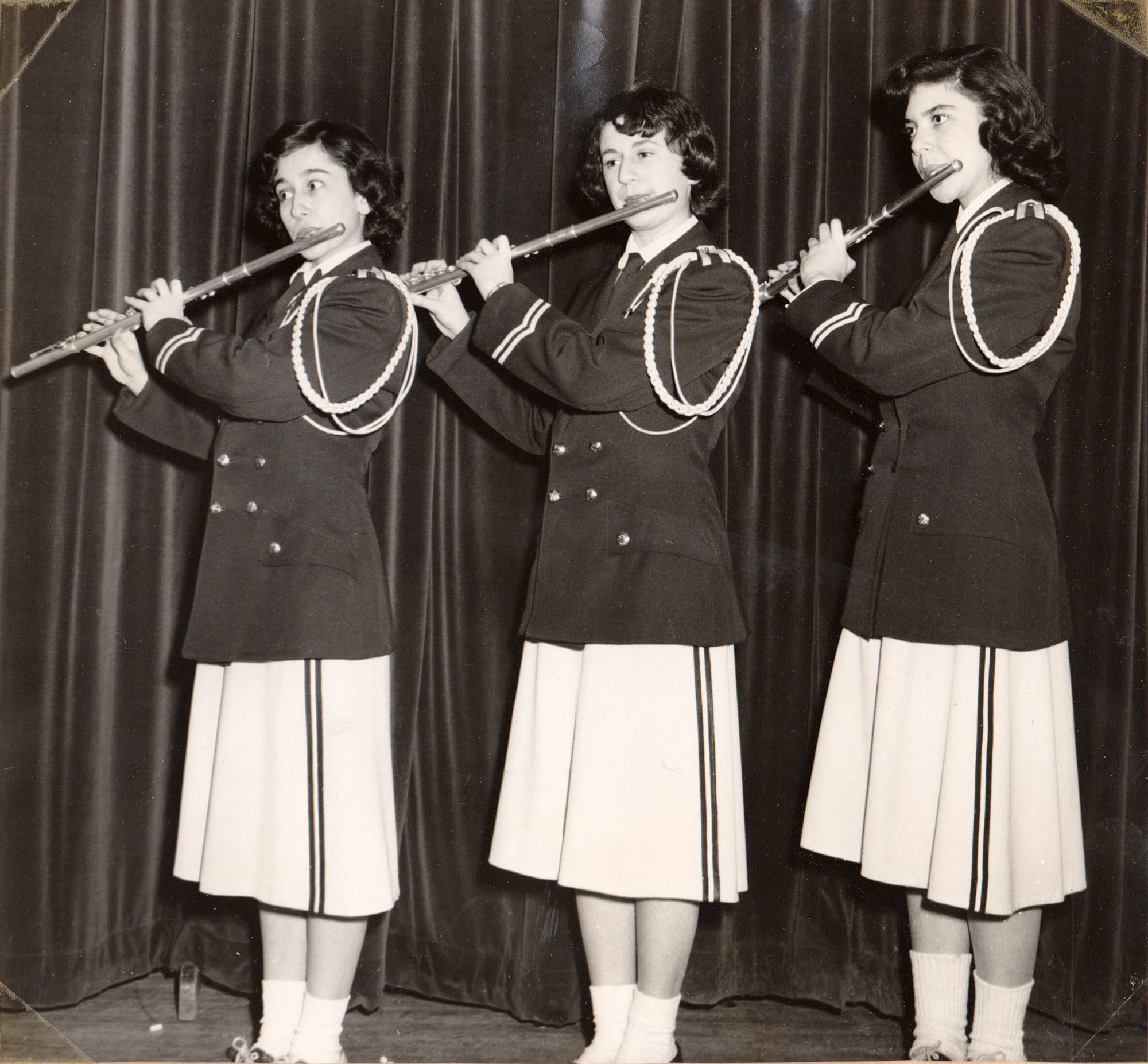
Marching Band, A.B. Davis High School
Gilbert & Sullivan
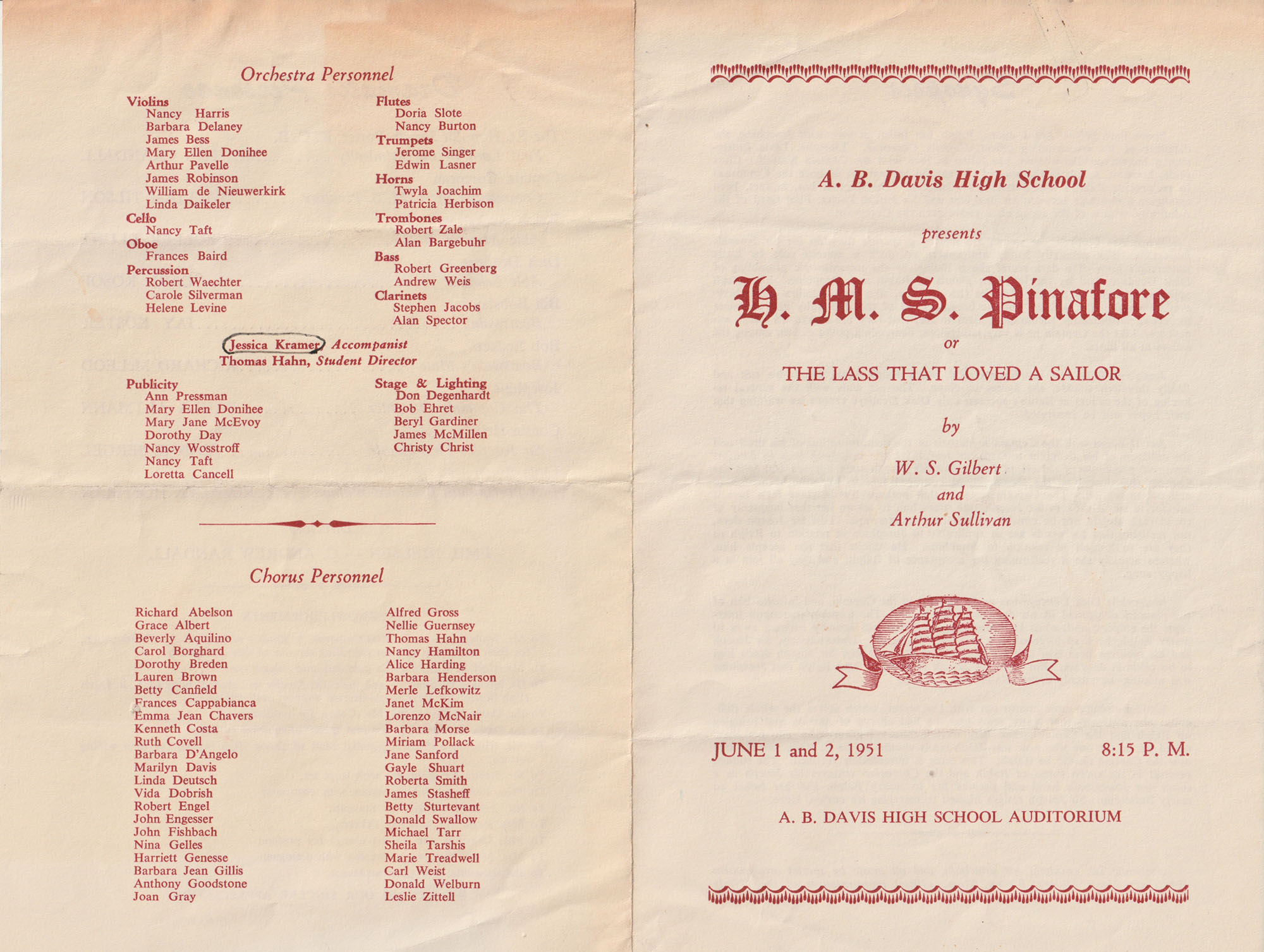
At Jessica's high school (grades 10-12), she was the rehearsal accompanist for the spring musical each of her three years there. The rehearsal accompanist is at every single rehearsal, for leads, chorus, dance rehearsals, everything, from the first rehearsals when people are standing around reading and singing from scores, until the last rehearsal before the sitzprobe, when the cast meets up with the orchestra, usually about a week before the performances. This is normally a critical but invisible role (to the audience), as the rehearsal pianist hands over the reins to the orchestra. Apparently she was also able to play in the pit for the performances (see the Pinafore photo(s) below).
1951: H.M.S. Pinafore
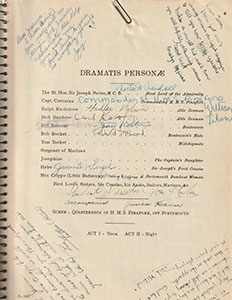
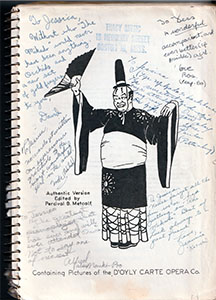
Yearbook-style inscriptions from classmates after Pinafore. (7.6MB pdf)
Note: some pages are duplicated upside-down to make it easier to read all autographs.
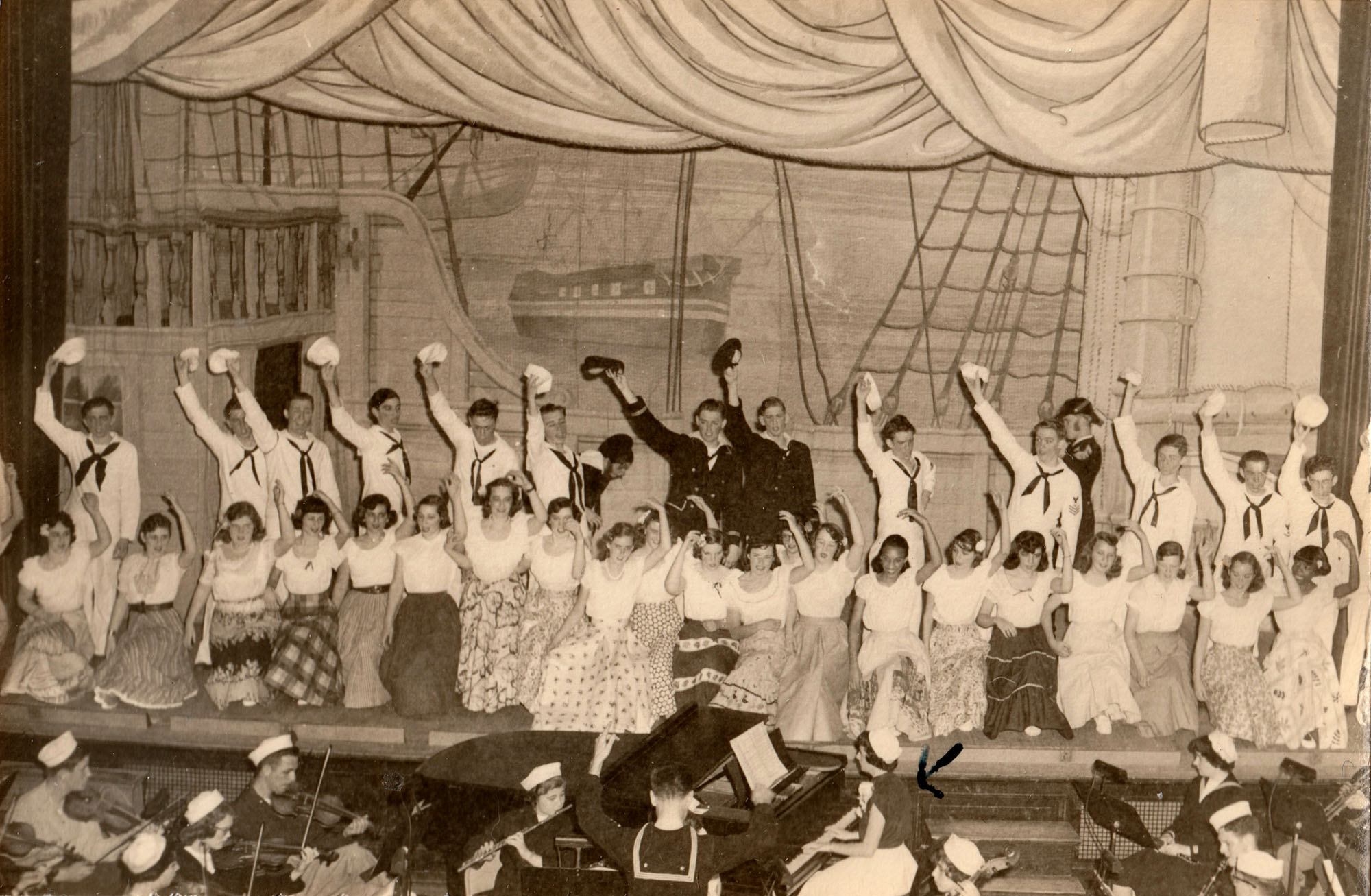
1952: The Mikado
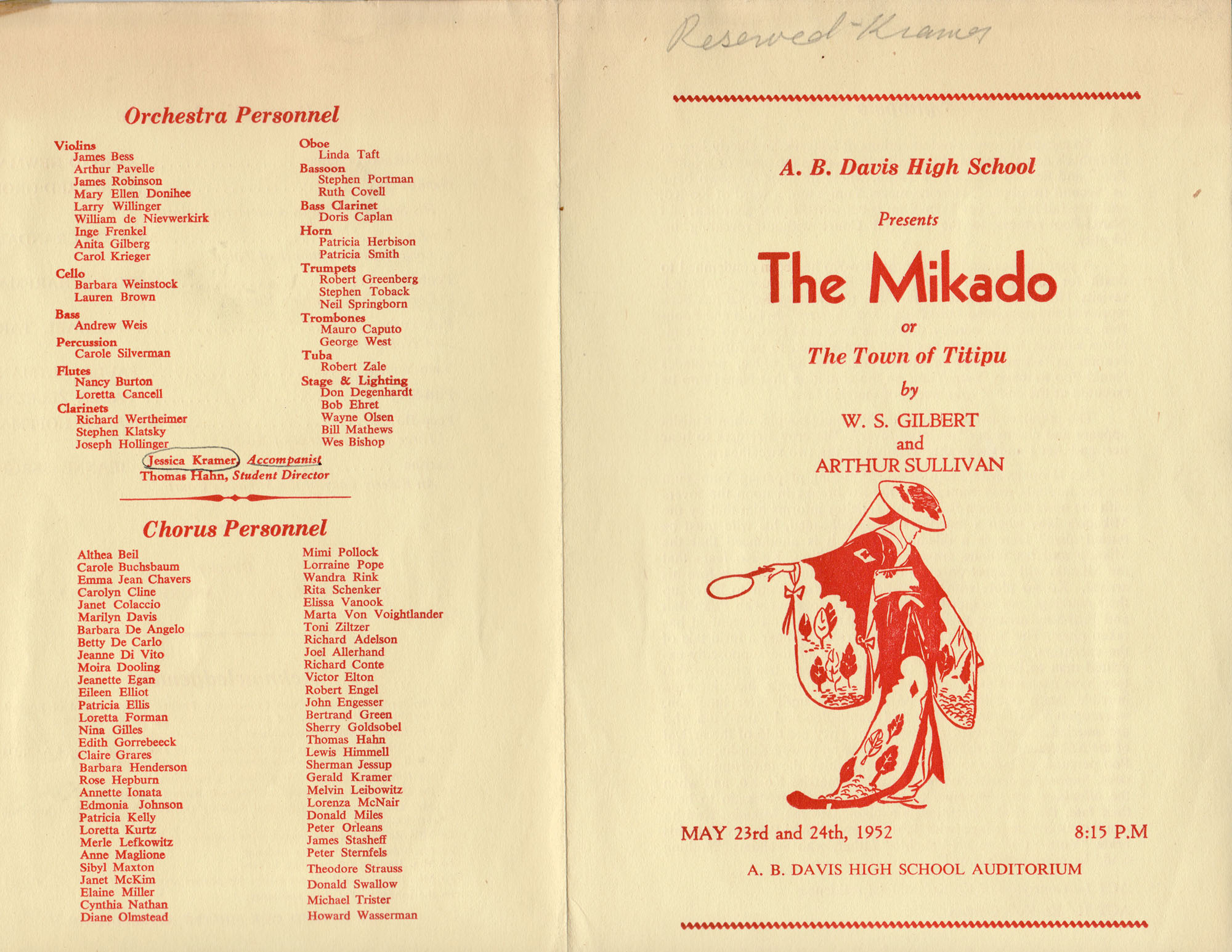
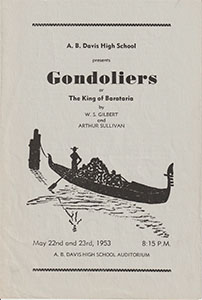
1953: The Gondoliers
Music festivals
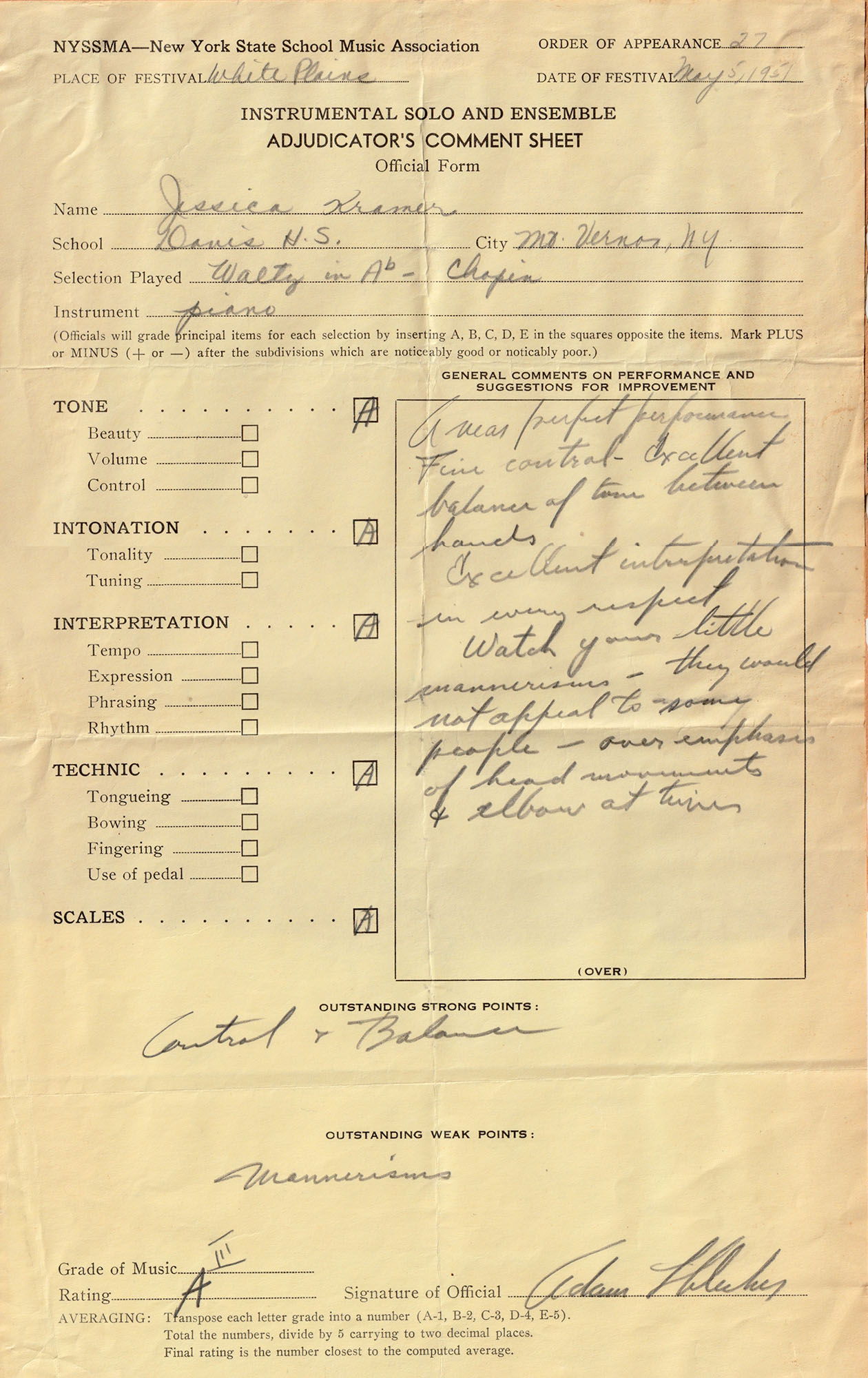
May 1951 Solo and Ensemble Festival,
White Plains. Jessica's adjudicator
comment sheet (Chopin Waltz in A-flat)
"A near perfect performance..."
I (David) remember these music festivals from when I was in high school (1978-82), but did not realize they already existed in the post-war period. A busload of music students from one high school (or junior high school) would travel to a central place where there would be busloads of students from other schools, too. These "Solo and Ensemble" festivals allowed students to hear students from other schools. Each individual or group (including entire bands or orchestras) would perform for a judge (and a small crowd of other people). The judges (usually local music teachers or professors) would offer verbal and/or written feedback about the performance, trying to offer constructive criticism.
This adjudication sheet is from a festival (sponsored by the New York State School Music Association) which Jessica attended in White Plains, NY in May 1951 (age 14, 10th grade).
Recitals
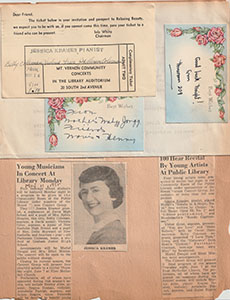
May 1951: recital with Mount Vernon Concert Group
ticket, program, articles
From Jessica's scrapbook)
Andrew Frierson
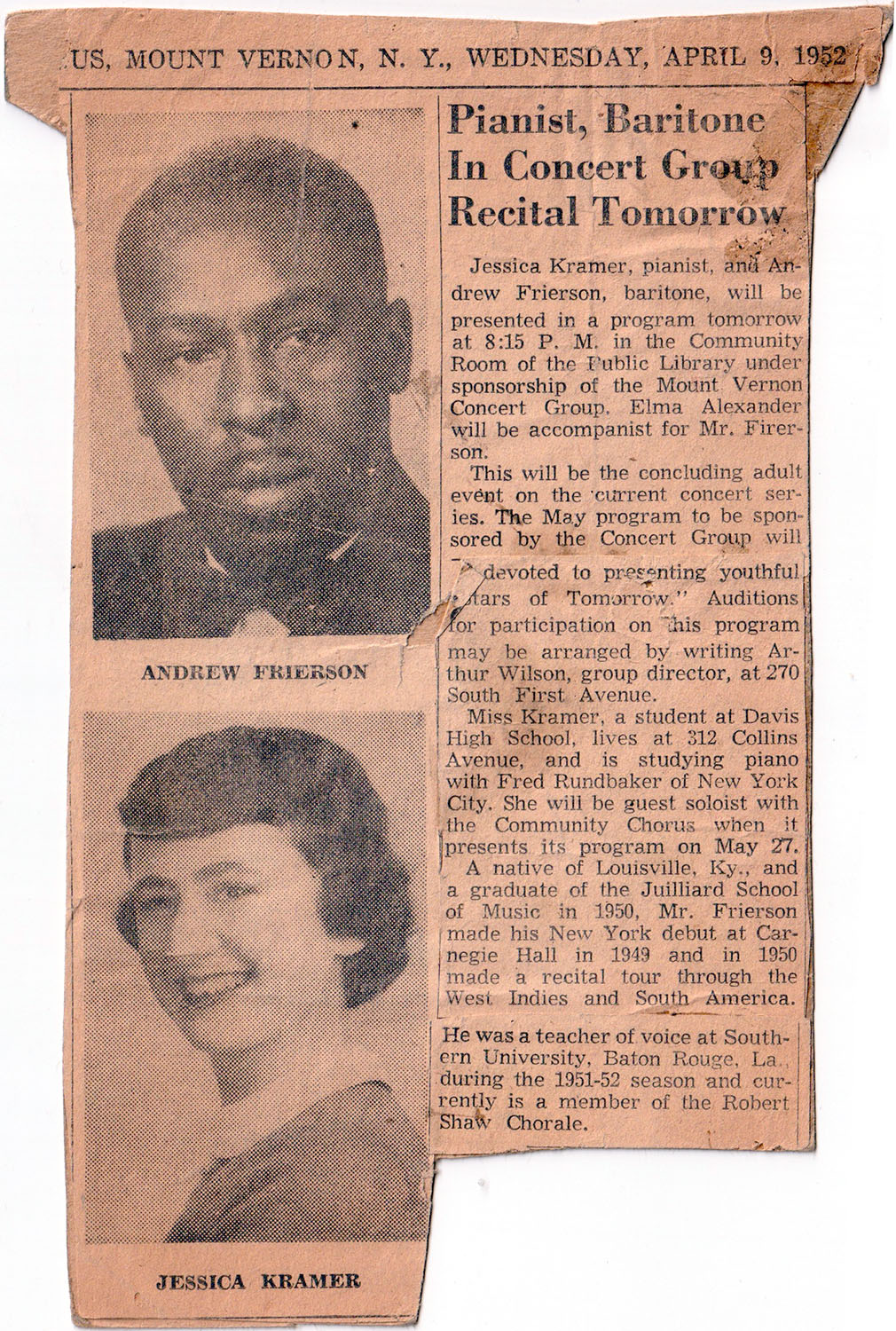
1952 recital with Andrew Frierson
Mount Vernon Daily Argus, April 9, 1952
Jessica (when she was age 15 and a high school junior) was the accompanist for a recital with Andrew Frierson in April 1952. She was listed as one of the "Stars of Tomorrow" and hence was accorded this opportunity.
I (David) did not recognize the name (perhaps I should have!), but Mr. Frierson (1924-2018) was a major figure as
an African American opera star. For example, he was asked to sing at the 1963 March on Washington!
Some of the fascinating information and wide recognition:
-
Oberlin College remembrance and biography
"Baritone Andrew Frierson Broke Opera's Color Barrier" - His Wikipedia entry
- New York Times obituary (Dec. 14, 2018)
"Andrew Frierson, Pioneering Black Opera Singer, Dies at 94" - Maury County Tennessee Black History: Andrew Benny Frierson
- Denyce Graves Foundation: Andrew Frierson
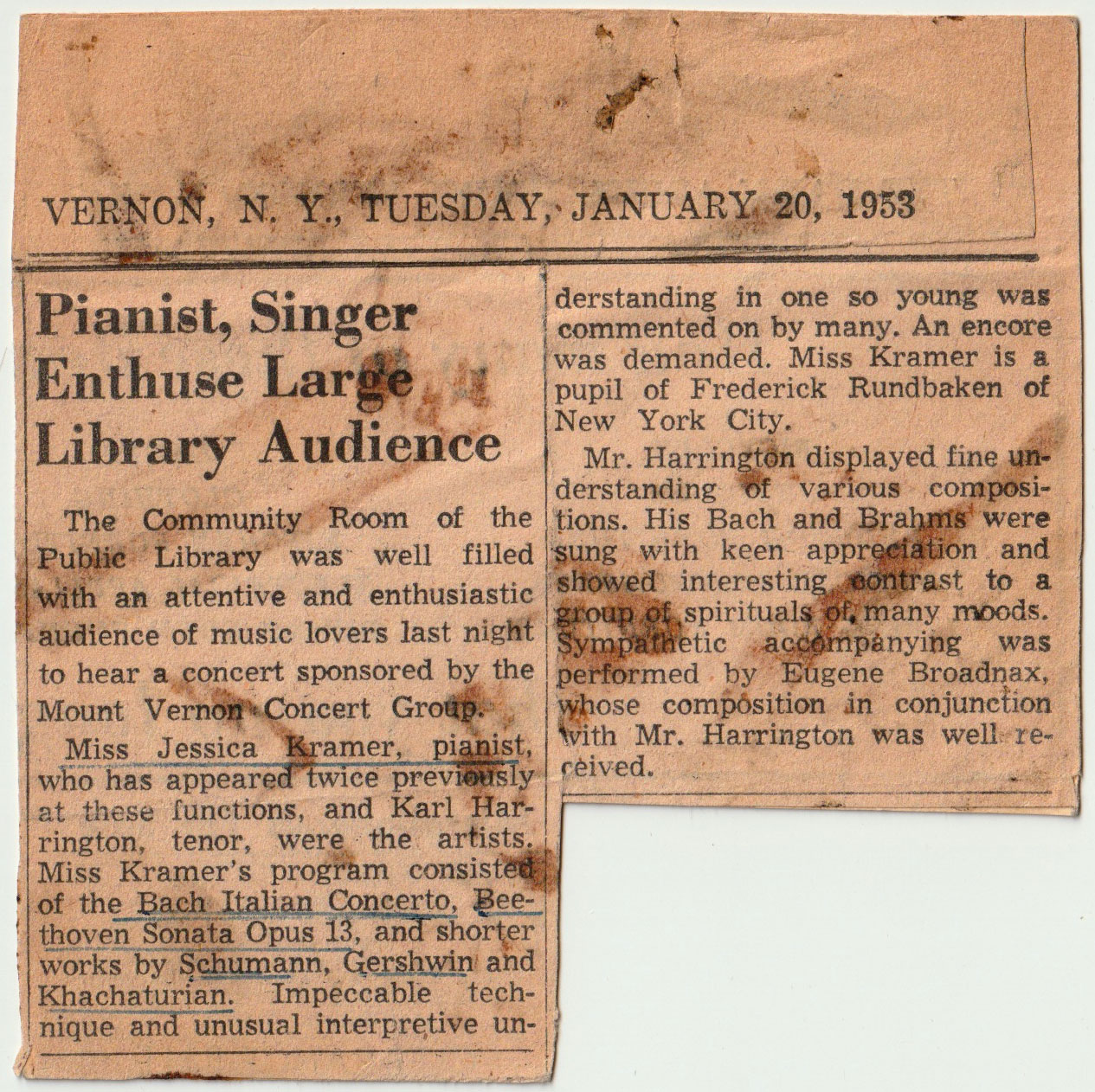
Newspaper review of recital with Mount Vernon Concert Group
Westchester Chamber Orchestra
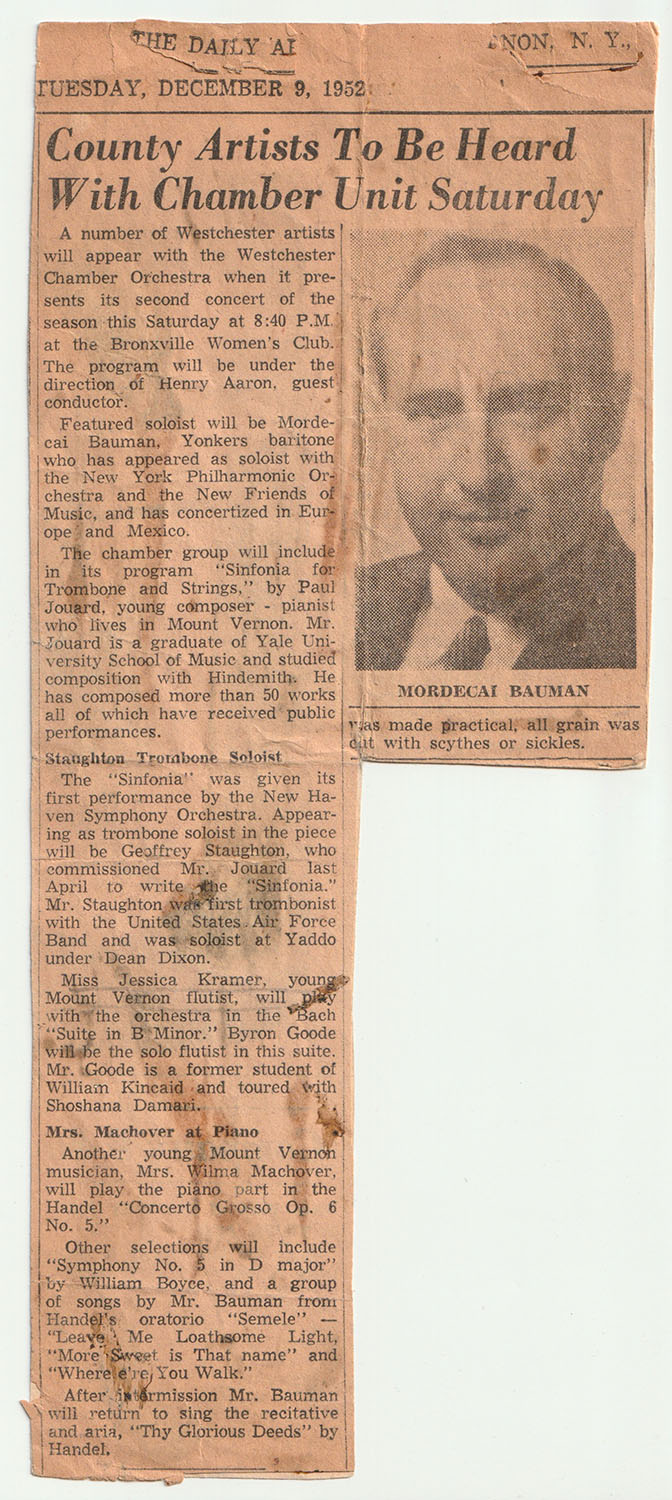
Jessica playing flute as member of chamber orchestra
December 9, 1952
Mount Vernon Daily Argus
(Jessica is specifically named in the article.)
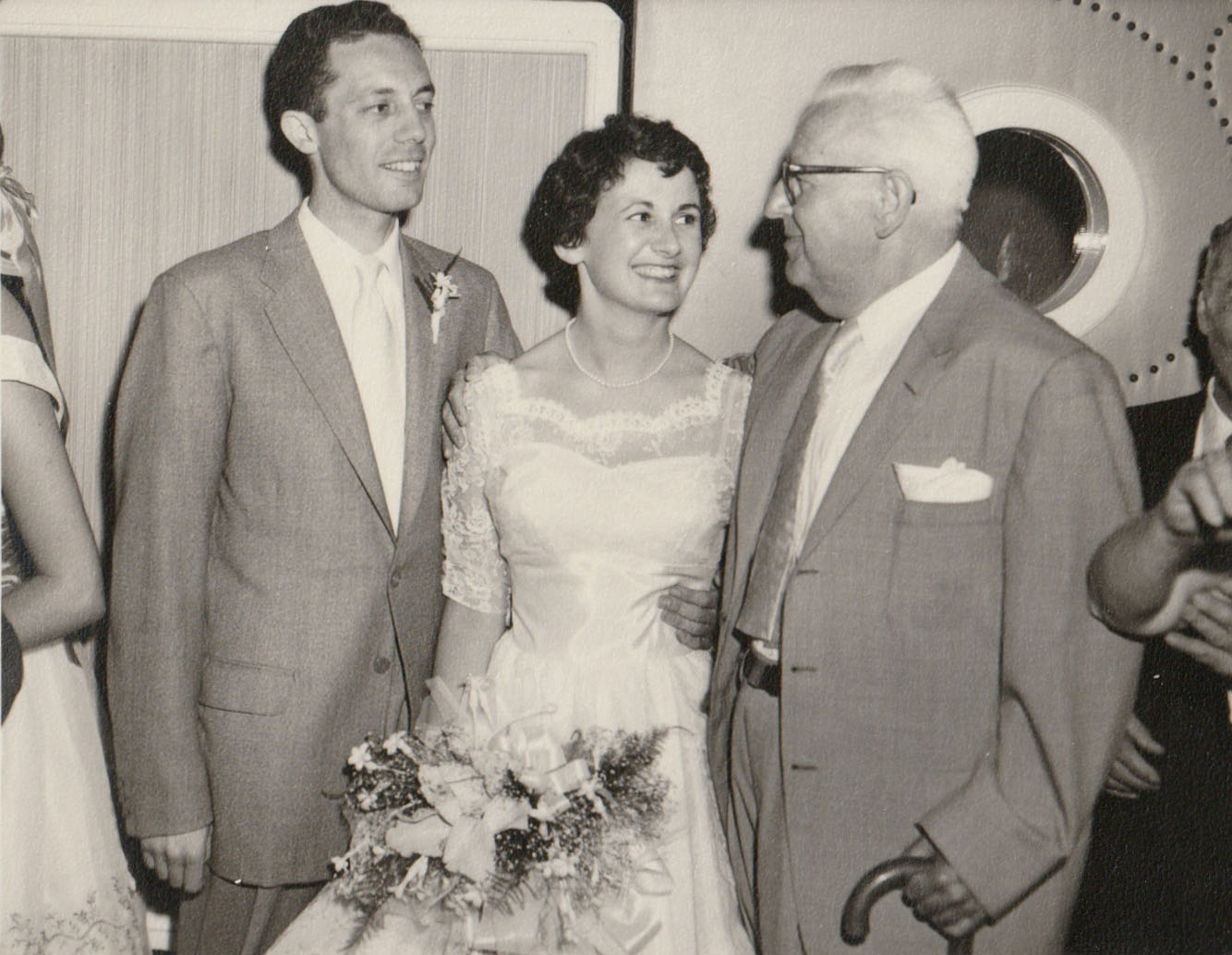
Photo with piano teacher, Mr. Frederick Rundbaken
High school music resume
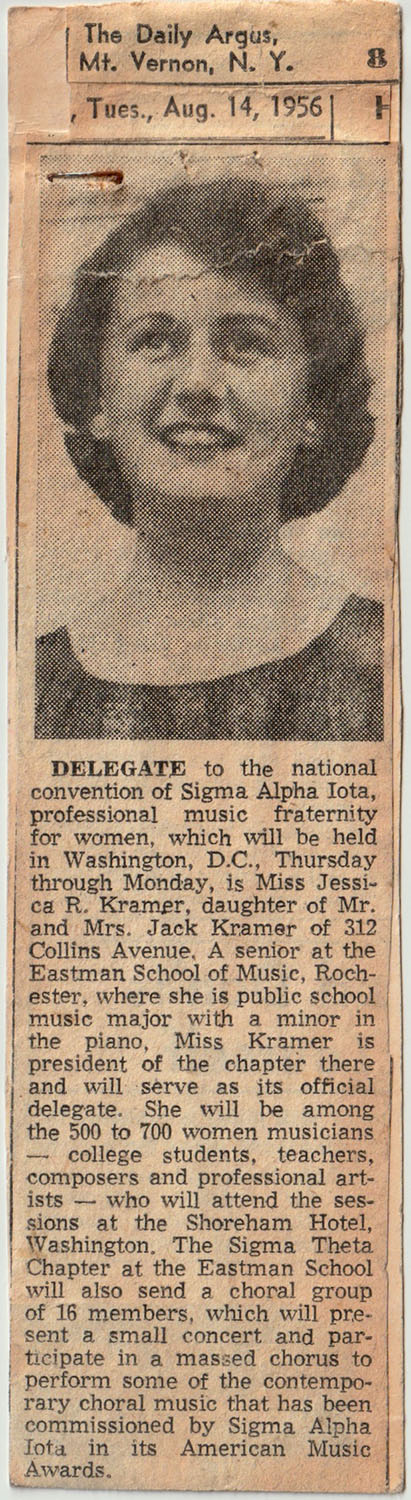
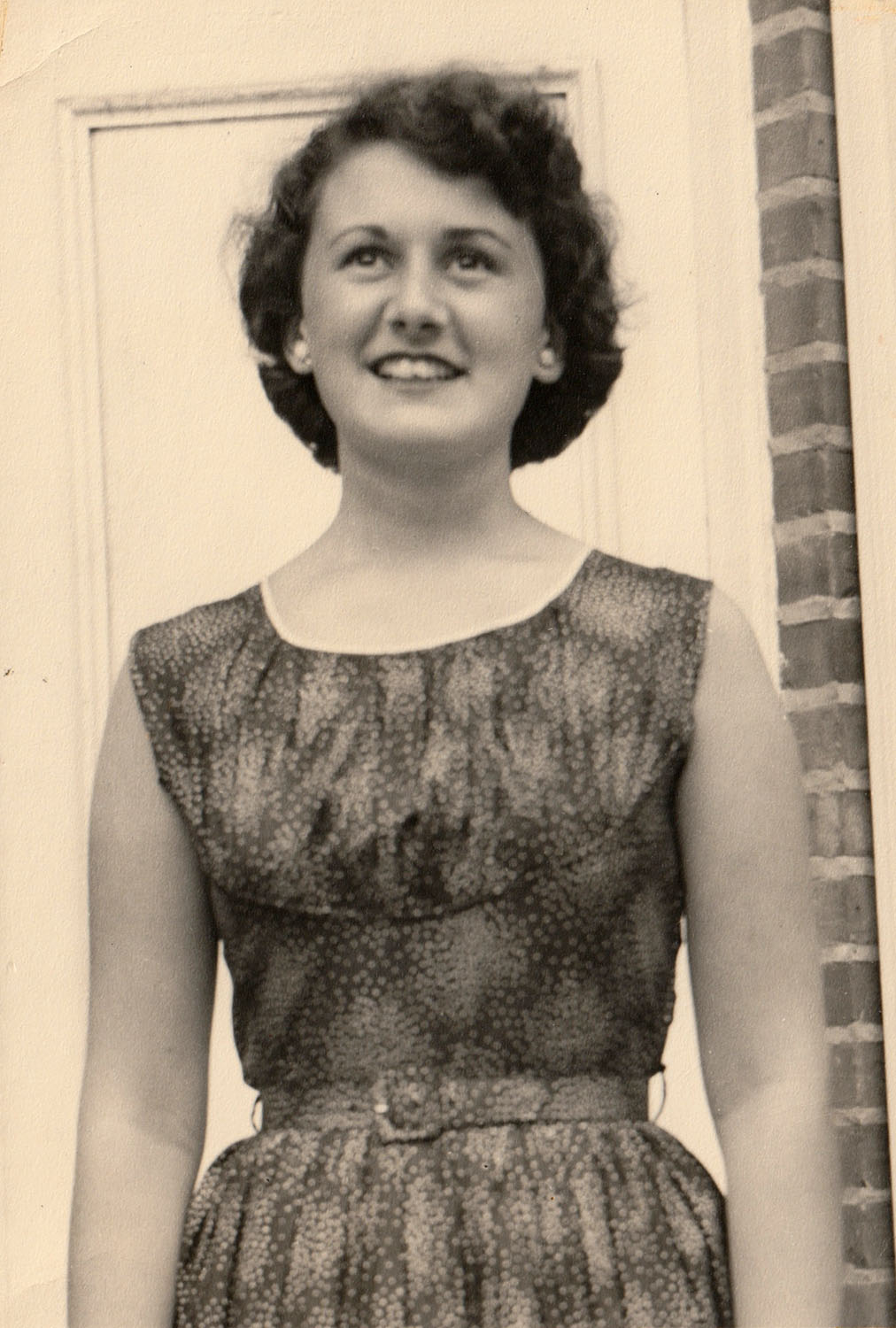
College
Morceau Symphonique
In December 1953, at the end of Jessica's first semester of freshman year at the Eastman School of Music, she accompanied one James Clark performing the Morceau Symphonique by Alexandre Guilmant (written circa 1900). A 78rpm record of their performance was created, linked below.
Clark was a student of Emory Remington, the legendary trombone professor at Eastman. By an interesting turn of events, another student of Remington's (about a decade later), David Kanter, became the trombone teacher for Jessica's grandson, Noah Friedlander. (David K. was also a friend of Jessica's daughter-in-law, Sheryl, in the Symphony of the Potomac in Silver Spring, Maryland.) And to complete the connection, Noah had the opportunity to play the Morceau with his high school band in May 2017, towards the end of his senior year of high school. (One last connection: the photo of David K. shown on the remembrance page, above, was taken by David F. in January 2017 during a photo shoot with the Symphony of the Potomac.)
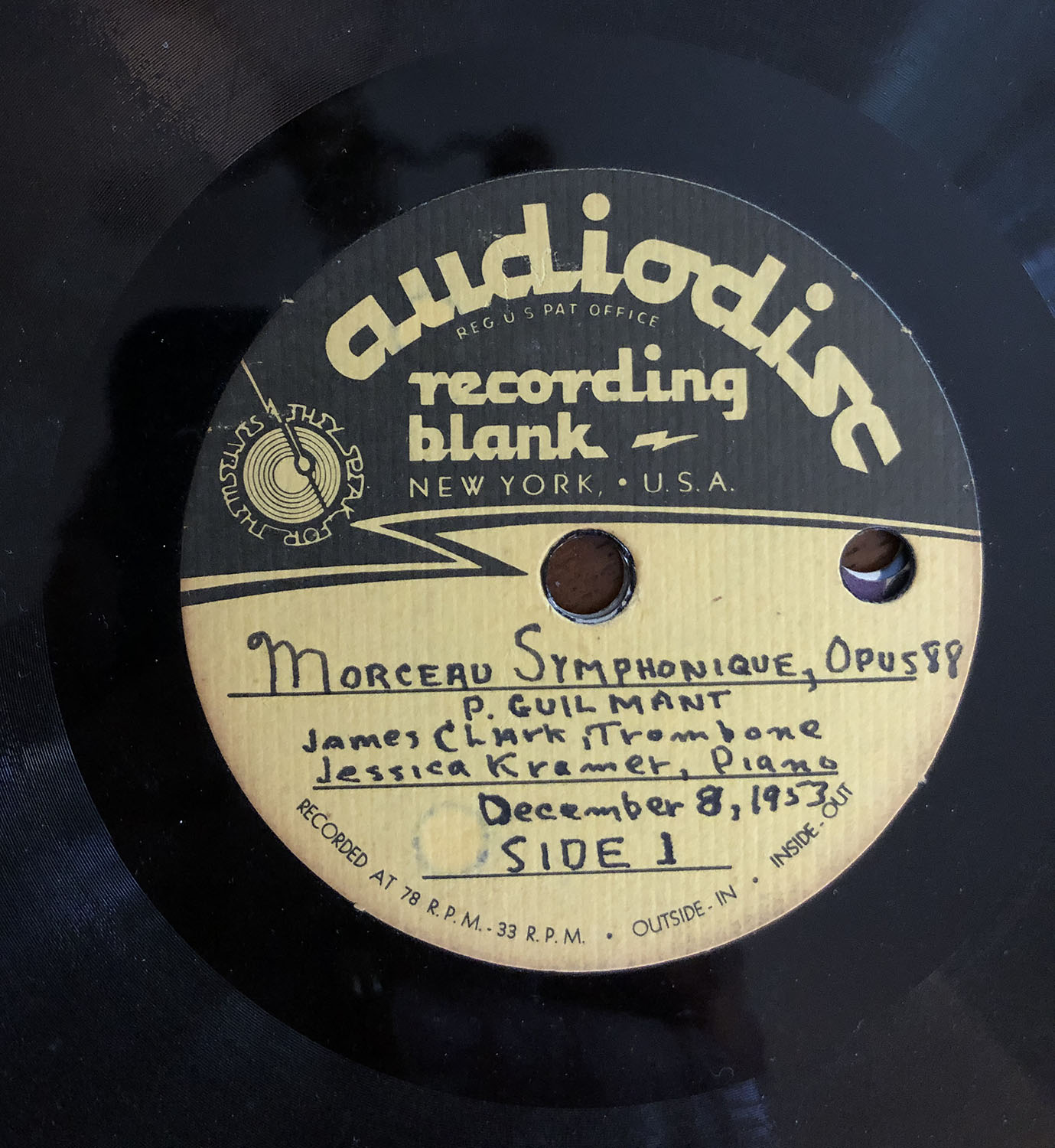
Record label, Morceau Symphonique
Dec. 8, 1953 (end of first semester, freshman year, Eastman)
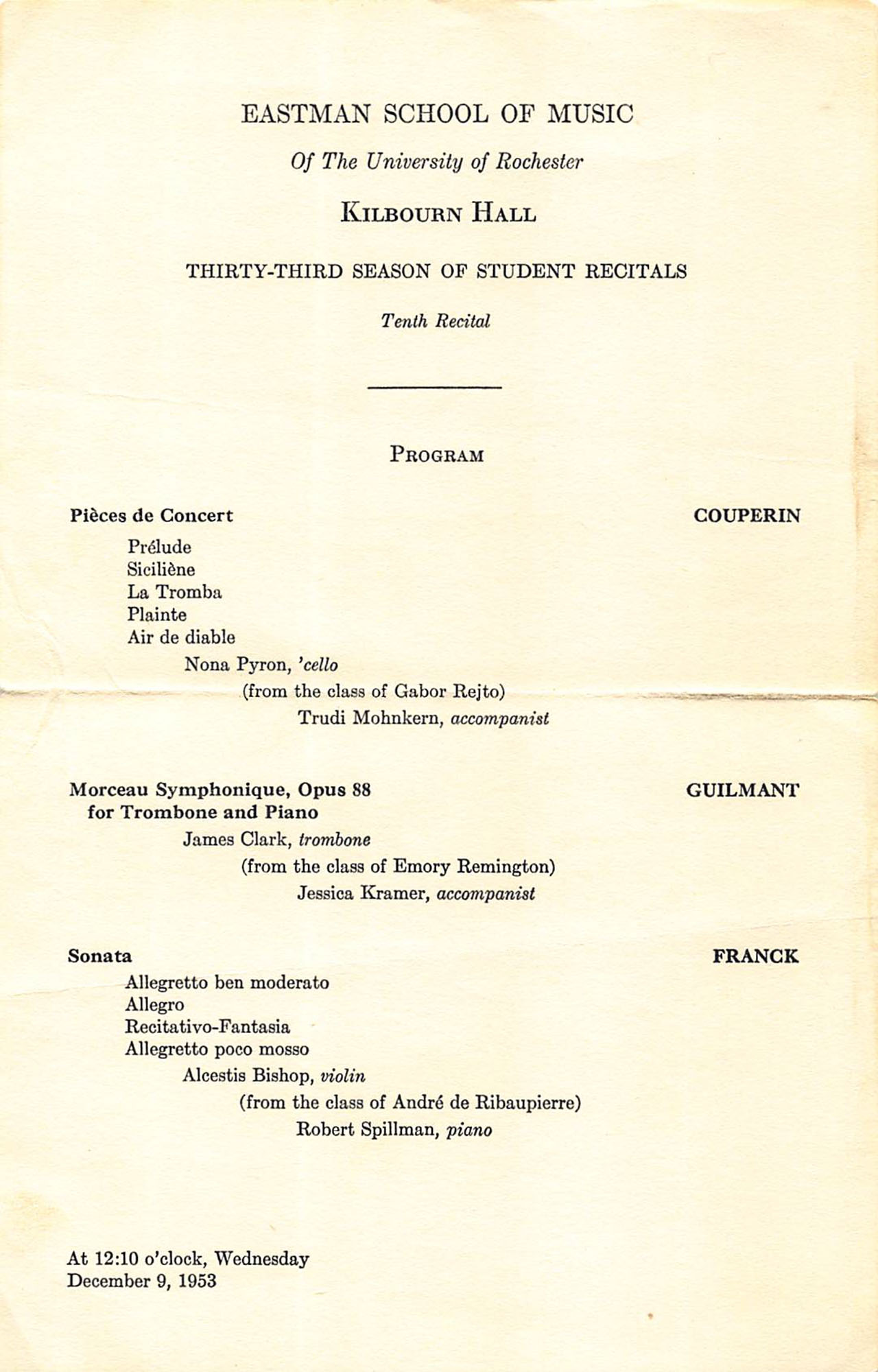
Concert program, Morceau Symphonique
Dec. 8, 1953 (end of first semester, freshman year, Eastman)
Noah Friedlander performing the Morceau Symphonique, Montgomery Blair High School Band, Silver Spring, MD, May 18, 2017
Profile in Cape Times Cape Town newspaper
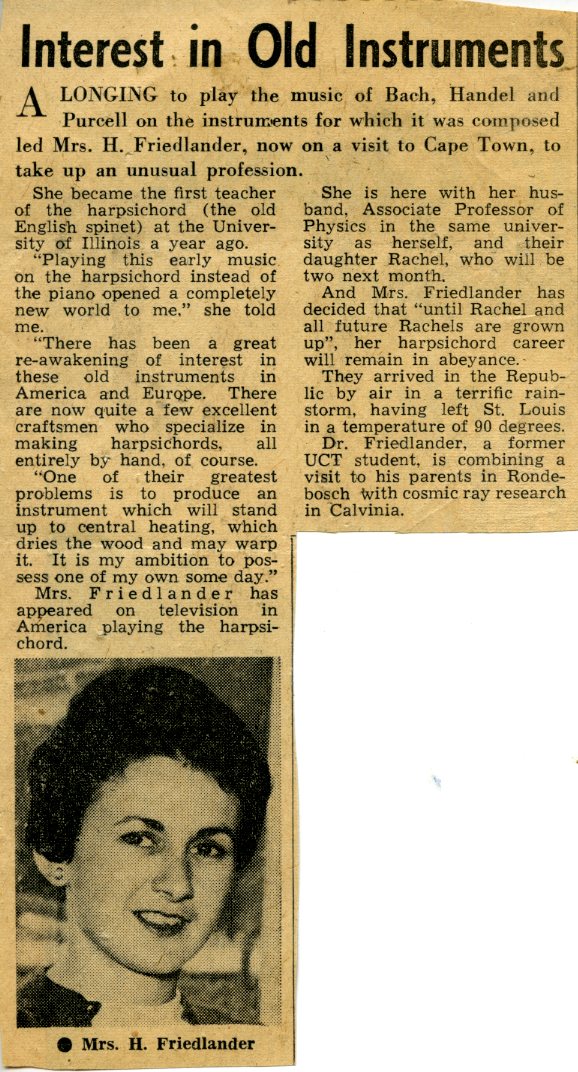
In 1962, Michael had a scientific balloon experiment in Calvinia, South Africa. Jessica and toddler Rachel accompanied him but stayed in Cape Town while he went on the balloon campaign. This is one of several articles that profiled her and them on this trip. (Cape Times. roughly September 1962) This was found in the South African Jewish Museum (SAJM) Archives, from a collection submitted (in 2025?) by Michael's first cousin Hazel Jungbacke.
There is also a typo in the first sentence (!) of the article. It should be "Mrs. M. Friedlander" as opposed to the listed "H. Friedlander" (refers to her father-in-law, Hirsch!).
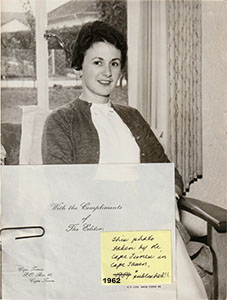
She was given a 6.5x8.5 inch print of a photo from the portrait session "with the compliments of the editor," shown below right. It is clearly from the same shoot, but a very slightly different image than the one used, based on slight differences in her head position and the outside background in the two images. It appears to have been shot on a rainy day, since the marks on the window look like rain, not dust marks on the print.
Music Performances in St. Louis
Leslie Chabay (Wikipedia) , tenor, was on the Washington University faculty for more than 20 years.
-
Oct 15, 1961 concert with Leslie Chabay
Sunday Evening Concert Series (Washington University) -
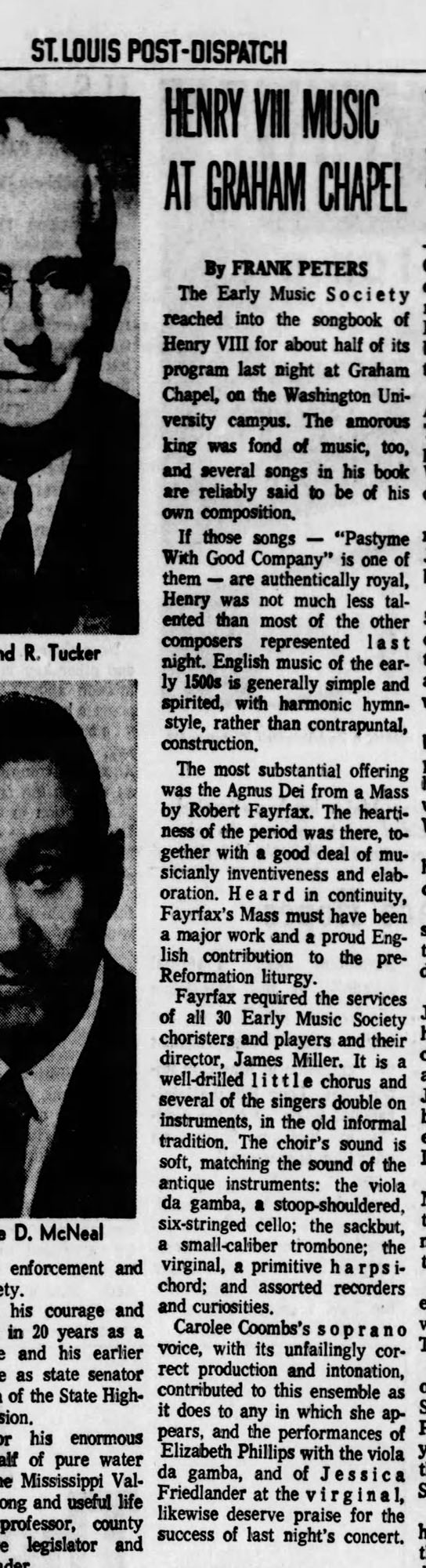
Oct 15, 1967 concert of Early Music Society, reviewed by Frank Peters,
longtime music critic of the St. Louis Post-Dispatch. (last paragraph) -
April 28, 1973 Wash U Camerata
Midwest Chapter, American Musicological Society
Benton Hall, Univ of Missouri St. Louis -
February 23, 1975 concert in honor of Leslie Chabay
(Washington Univ Music Department) -
February 23, 1976: A Musical Offering
Wash U and St. Louis Symphony Orchestra joint concert
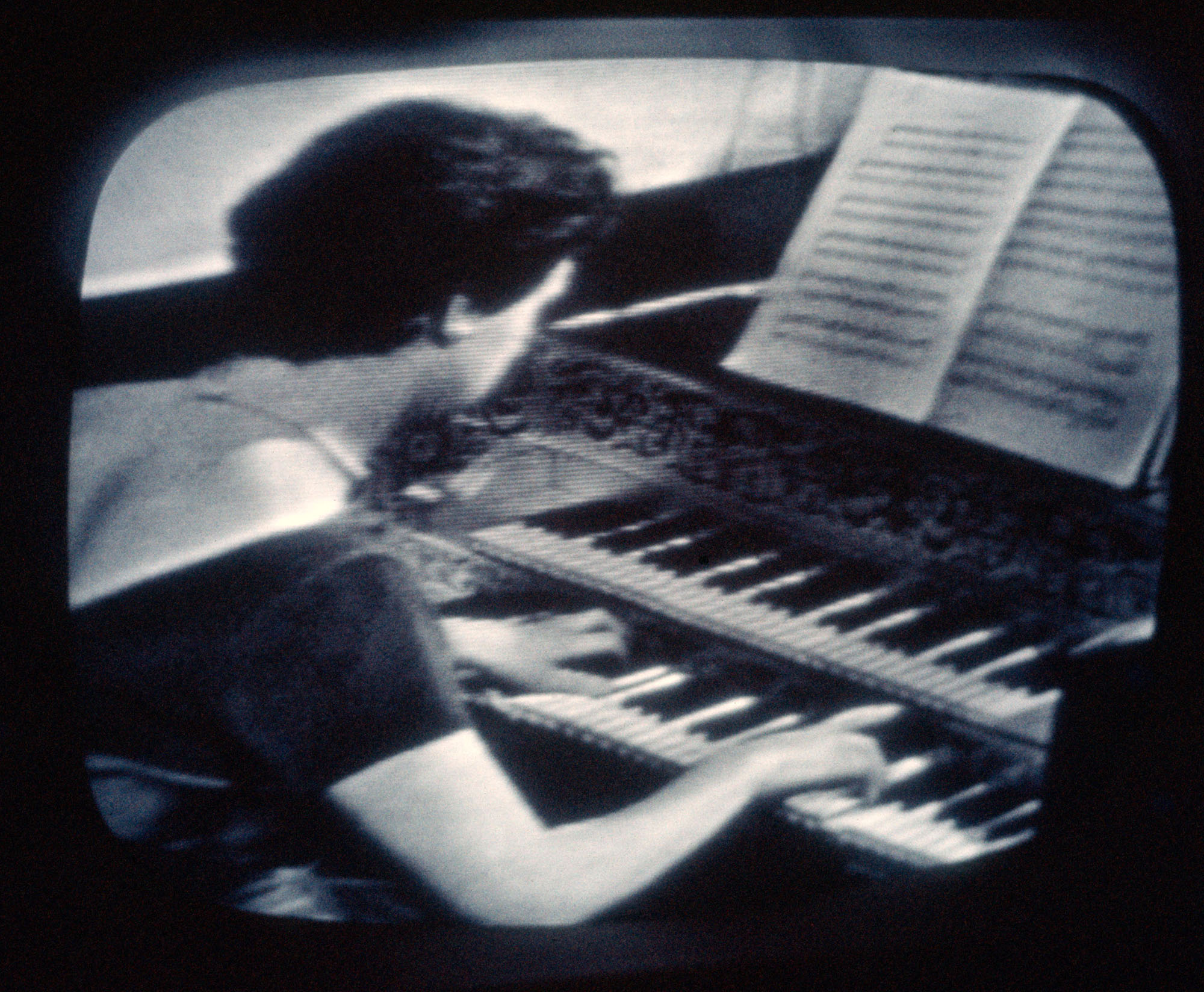

Jessica performed with the St. Louis Early Music Society, starting in 1968, before becoming a member of the Washington University Camerata, playing with them until at least 1975.
Washington University Camerata
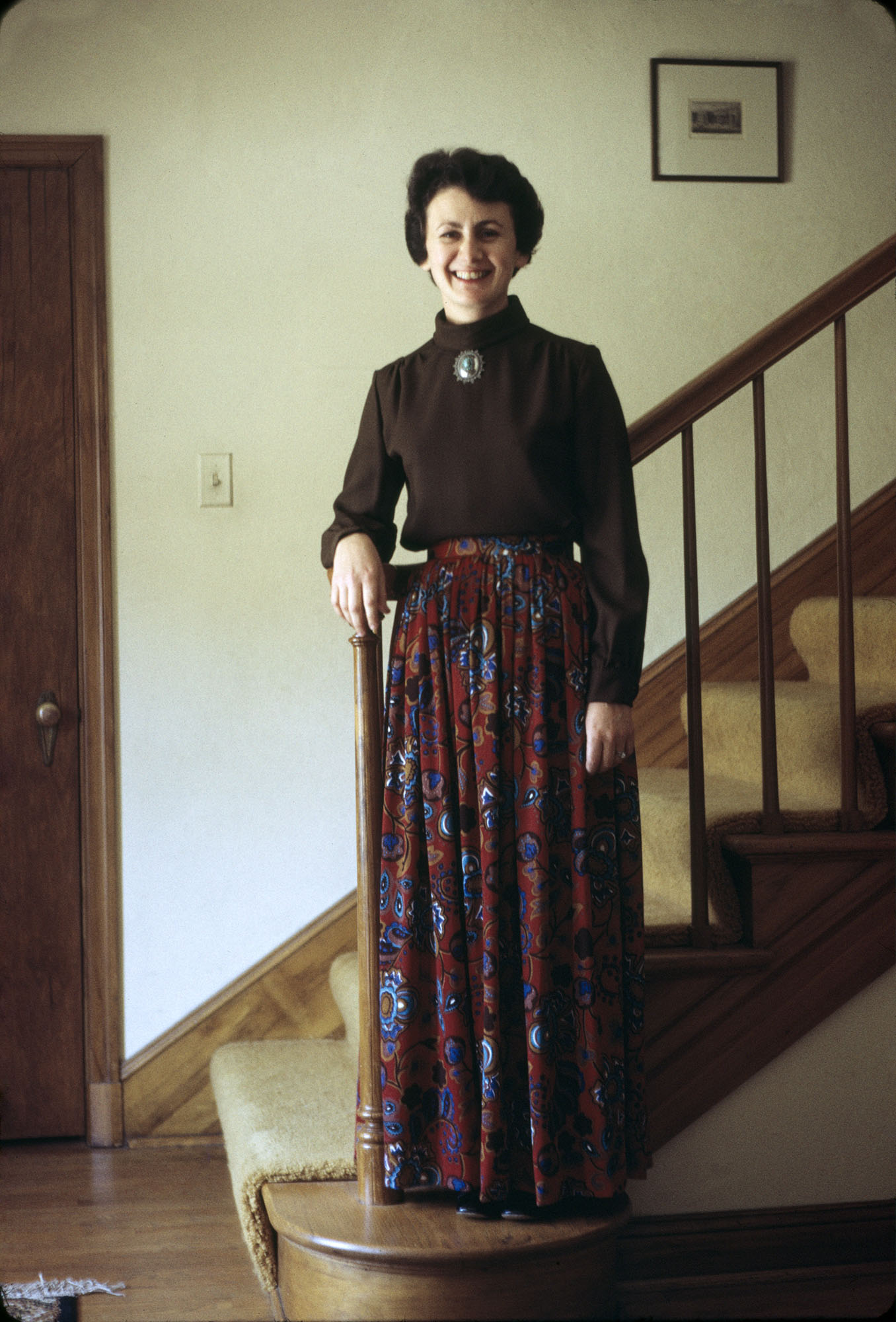
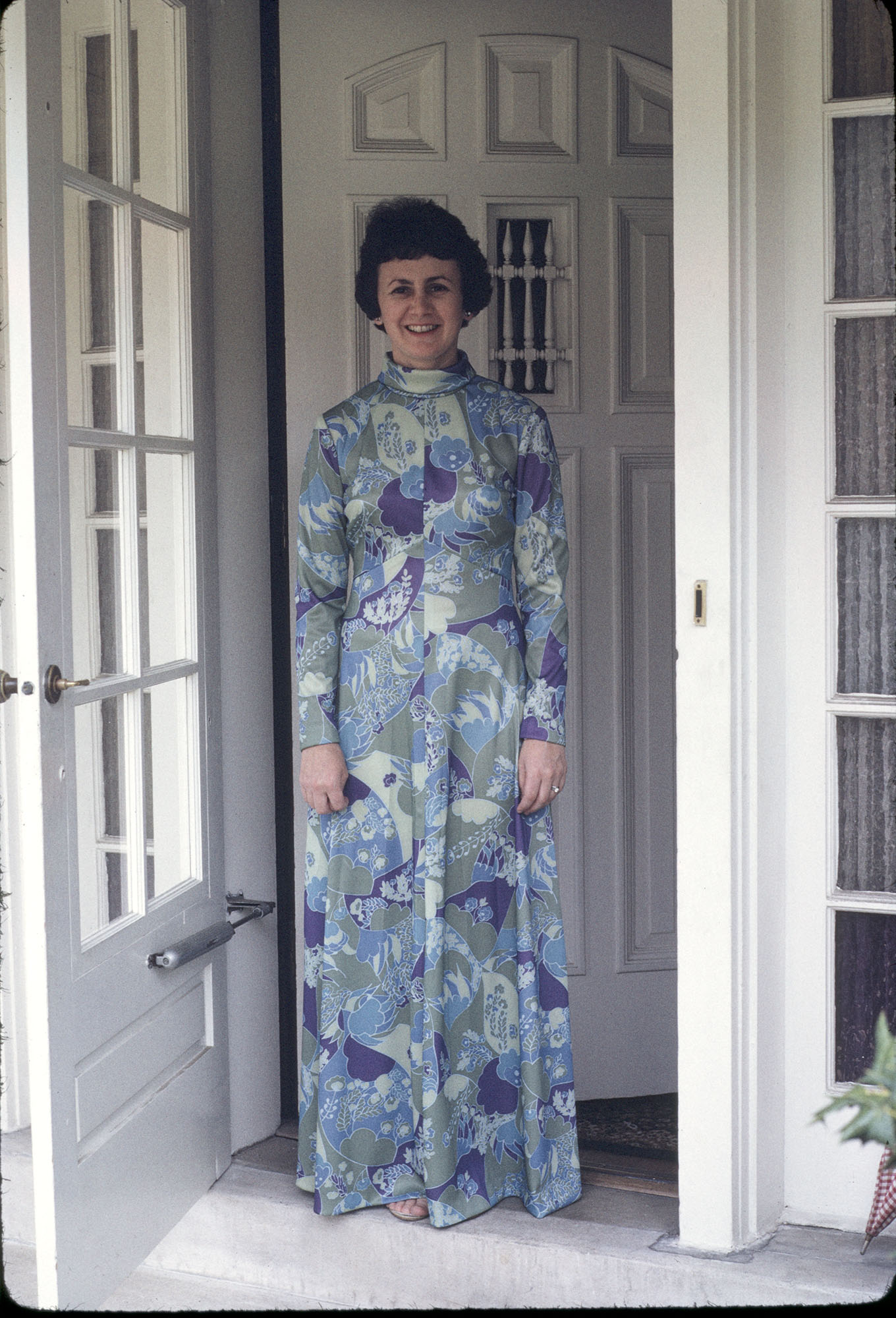
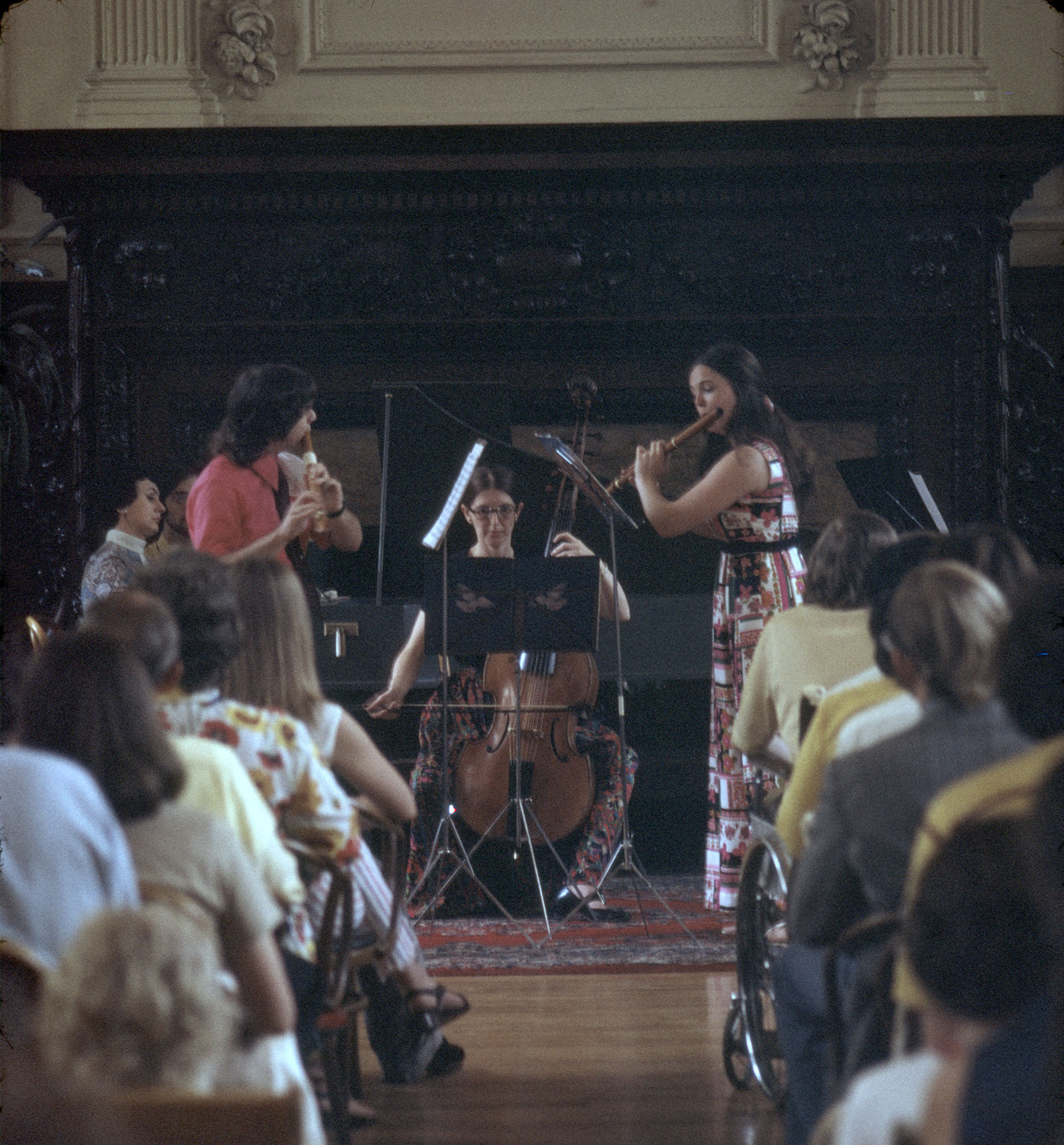
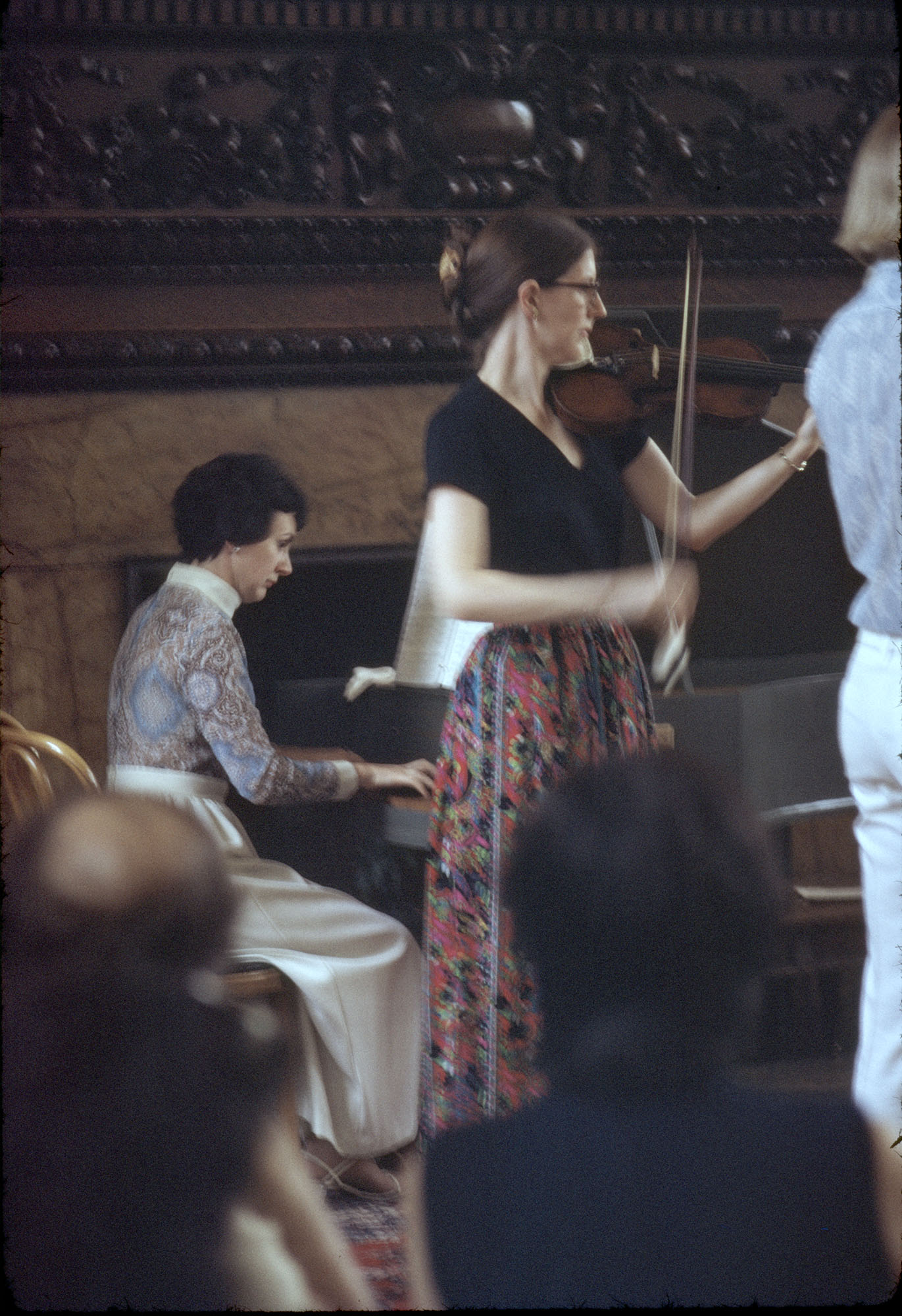
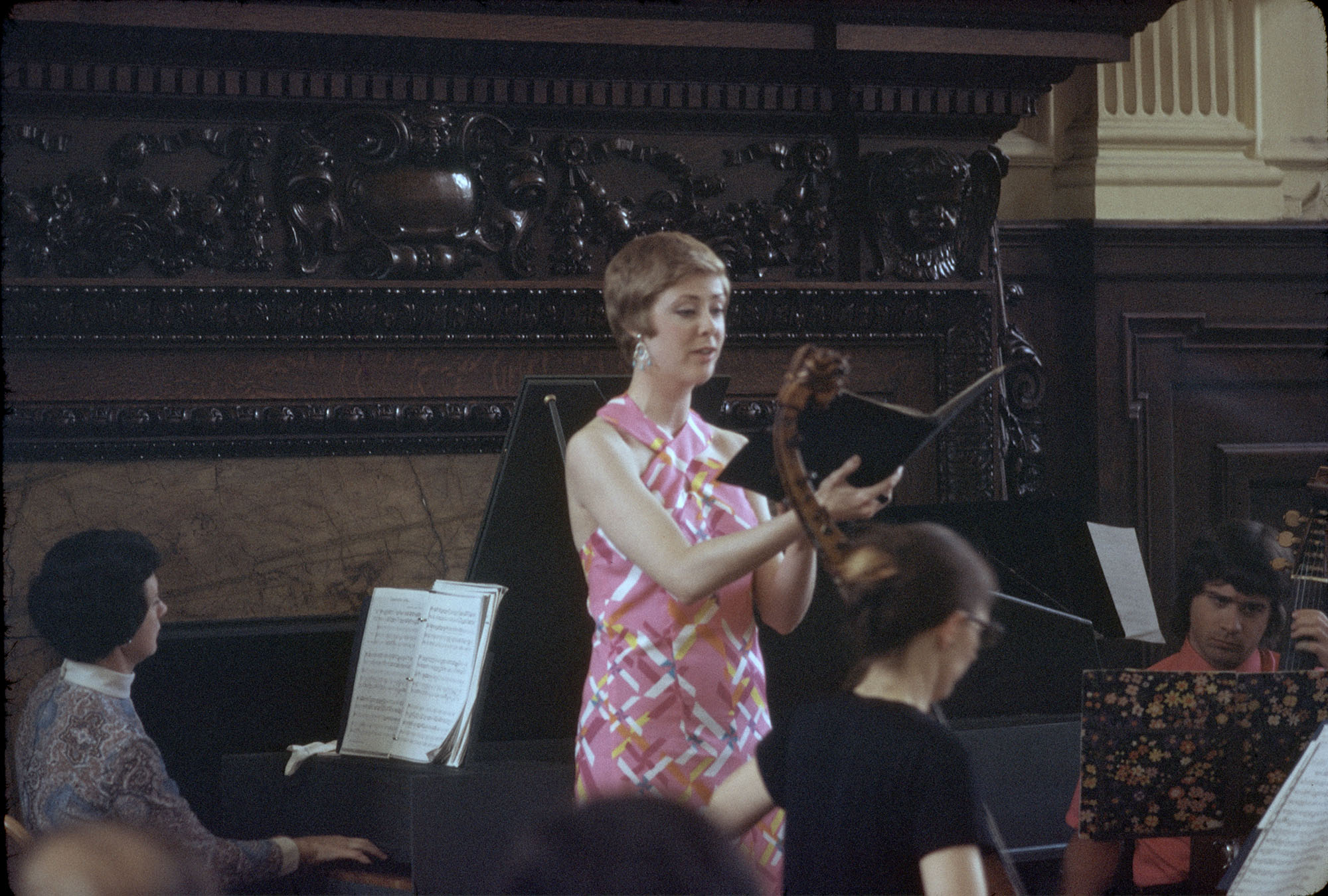
The Camerata was an "early music" (baroque and prior, up through early classical repertoire) group, emphasizing "period performance practice."
This was a combination of the instruments used and the style of playing. String instruments used gut strings (a mellower sound than modern strings) with bows with more curved sticks, held in the right hand farther from the end (the "frog"). Wooden flutes were used instead of metal ones (that were developed later). And keyboard parts were played on the harpsichord, not a piano (again, which was developed later).
Stylistically, players played with less vibrato, played trills (in all their variations) in a different way than one would with 19th or 20th century composers, to name just a few details.
[That is the briefest of thumbnails of period performance, for those who might not be familiar with the term. Many dissertations have been written about this!]
These photos show Jessica in long dresses at home about to leave for performances with the Camerata, as well as a series of photos by Michael of one May or June 1973 performance. This concert shows Jessica on harpsichord, John Jackson (co?-founder) on flute and viola da gamba, Elizabeth Phillips on baroque violin and viola da gamba, plus other musicians whose names are not known to me.
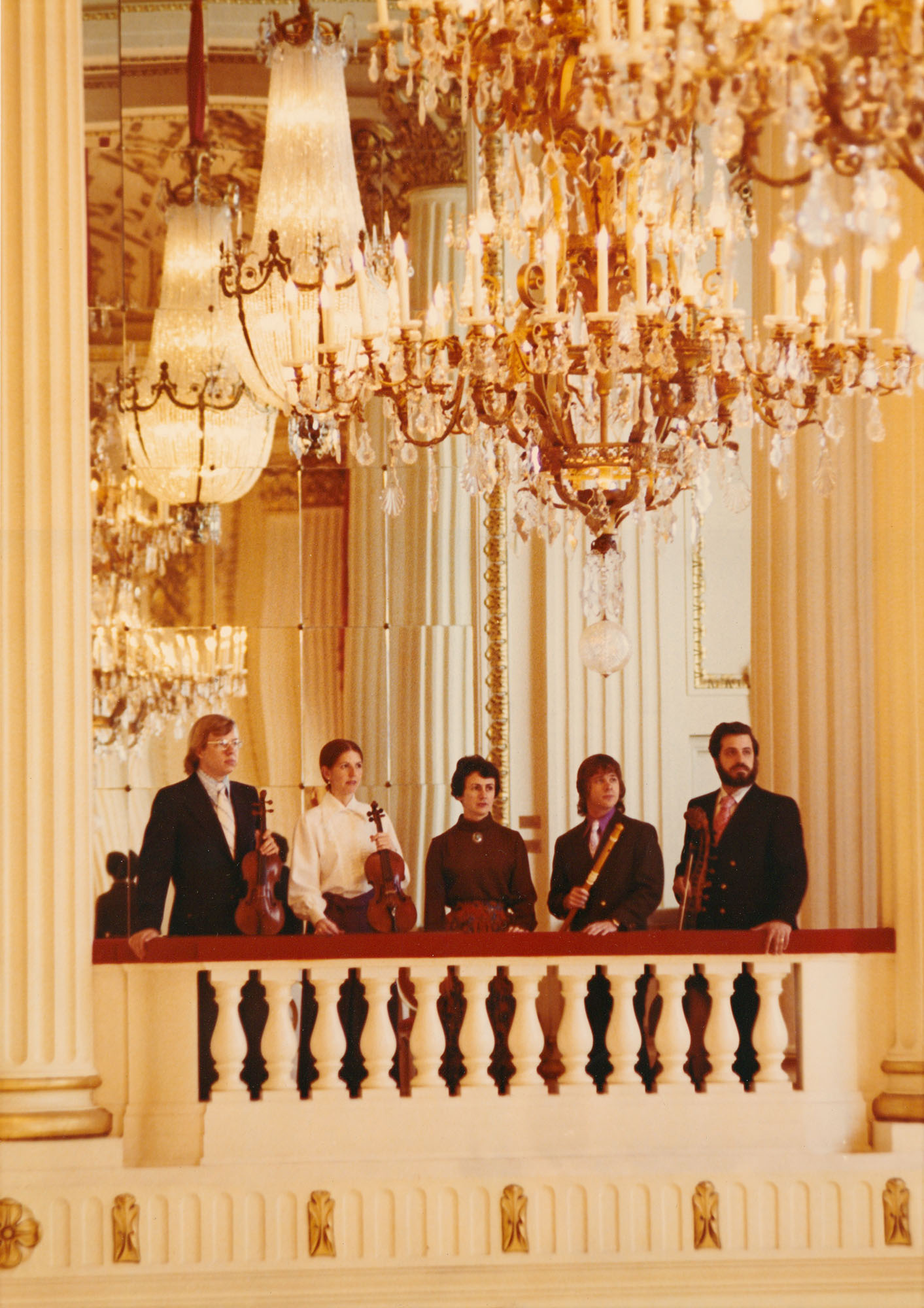
Washington University Camerata at Powell Hall, circa 1975
(Powell Hall (Wikipedia), a converted 1920s vaudeville theater, is the home of the St. Louis Symphony Orchestra.)
Liz Phillips (violin), Jessica (harpsichord, John Jackson (flute, director) in center.
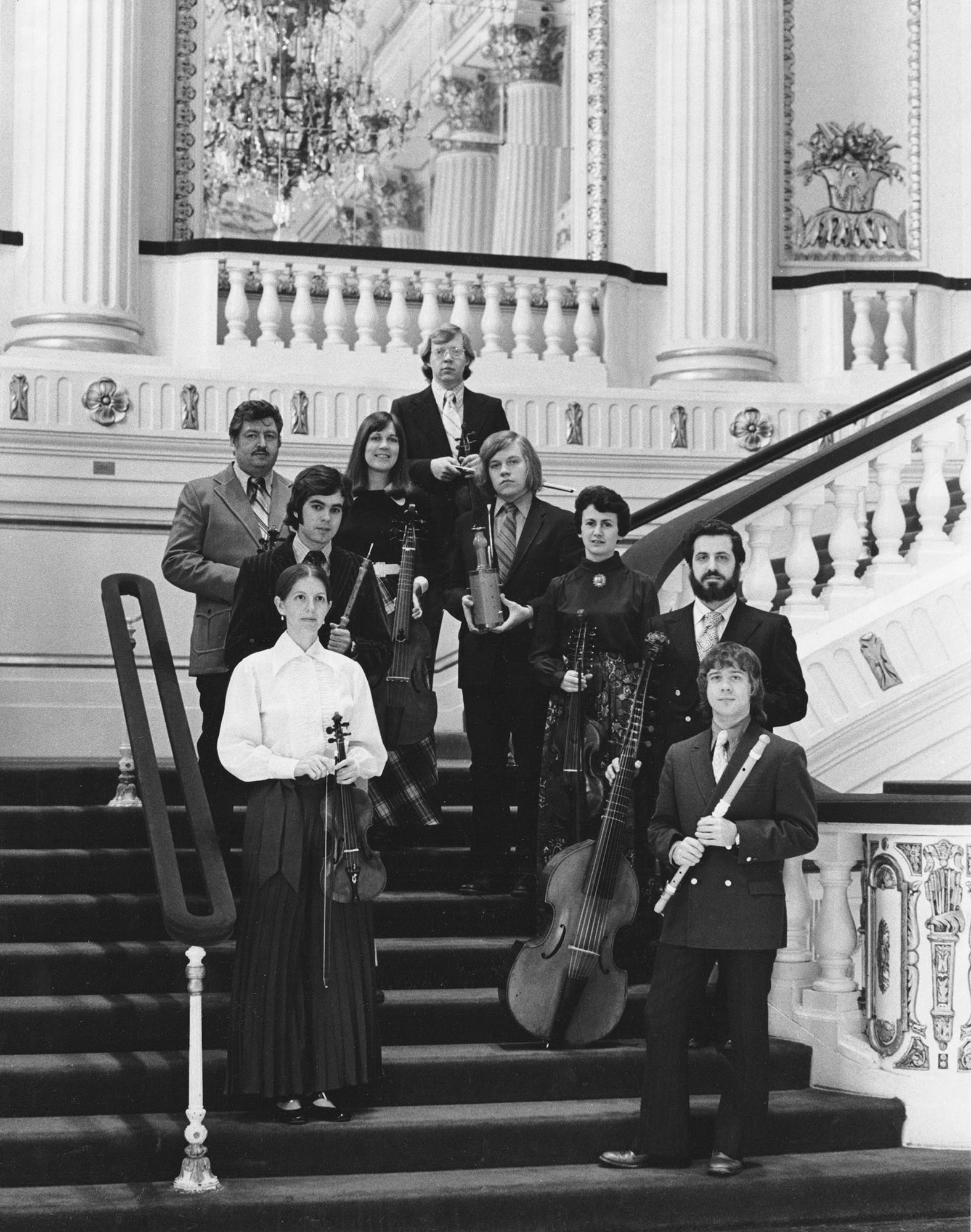
Washington University Camerata at Powell Hall Grand Foyer steps, circa 1975
Please note: this thumbnail is color (very small print) but the enlargement is from an 11x14" B&W print.
Also note that Jessica is holding a viol here, since everyone else in the photo was holding an instrument and the harpsichord would not fit on the steps!
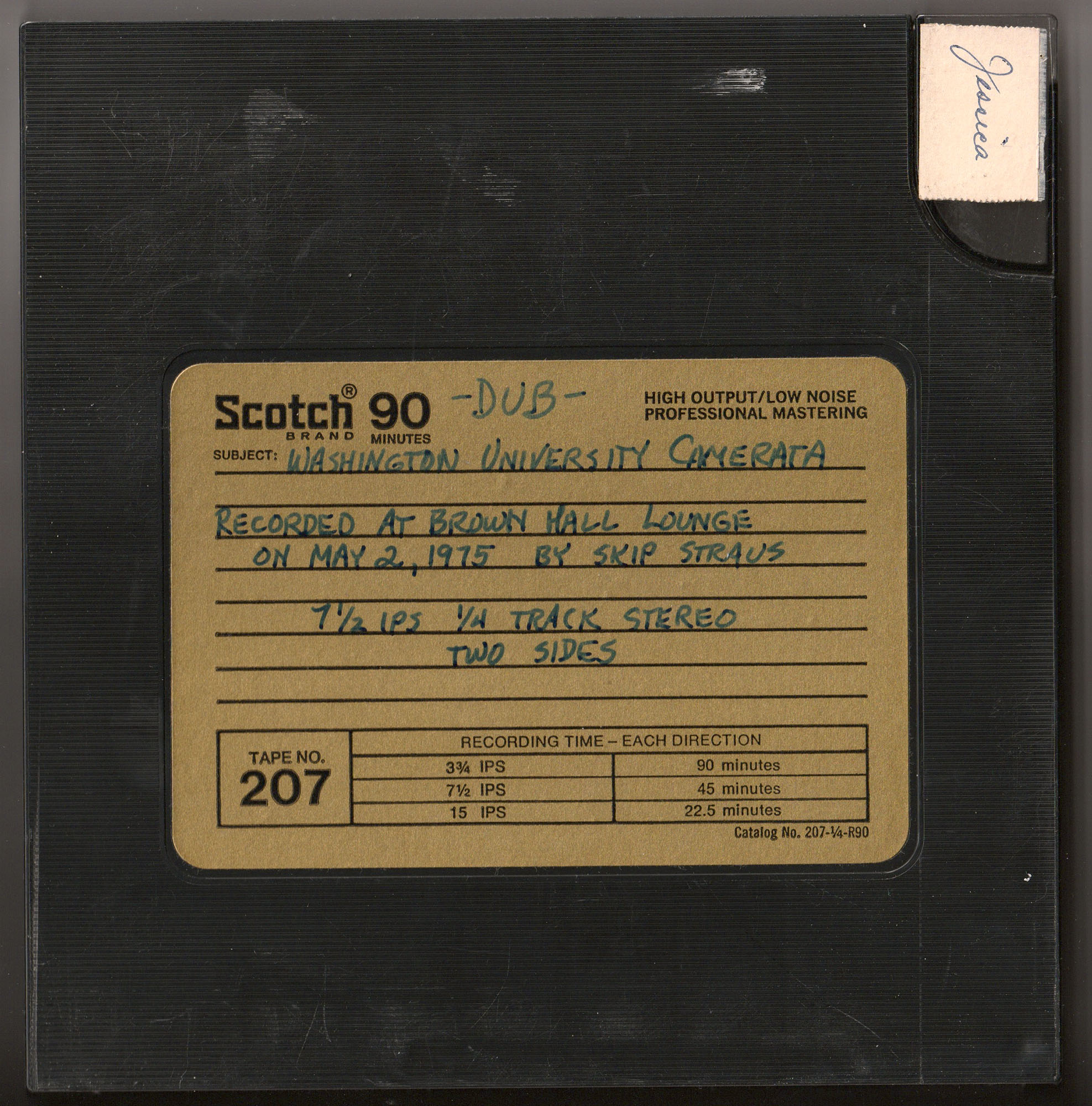
This is a recording of the Camerata from May 2, 1975. (The first piece does not appear to include harpsichord, which is heard starting around the 4 minute mark.)
Music in other places in St. Louis
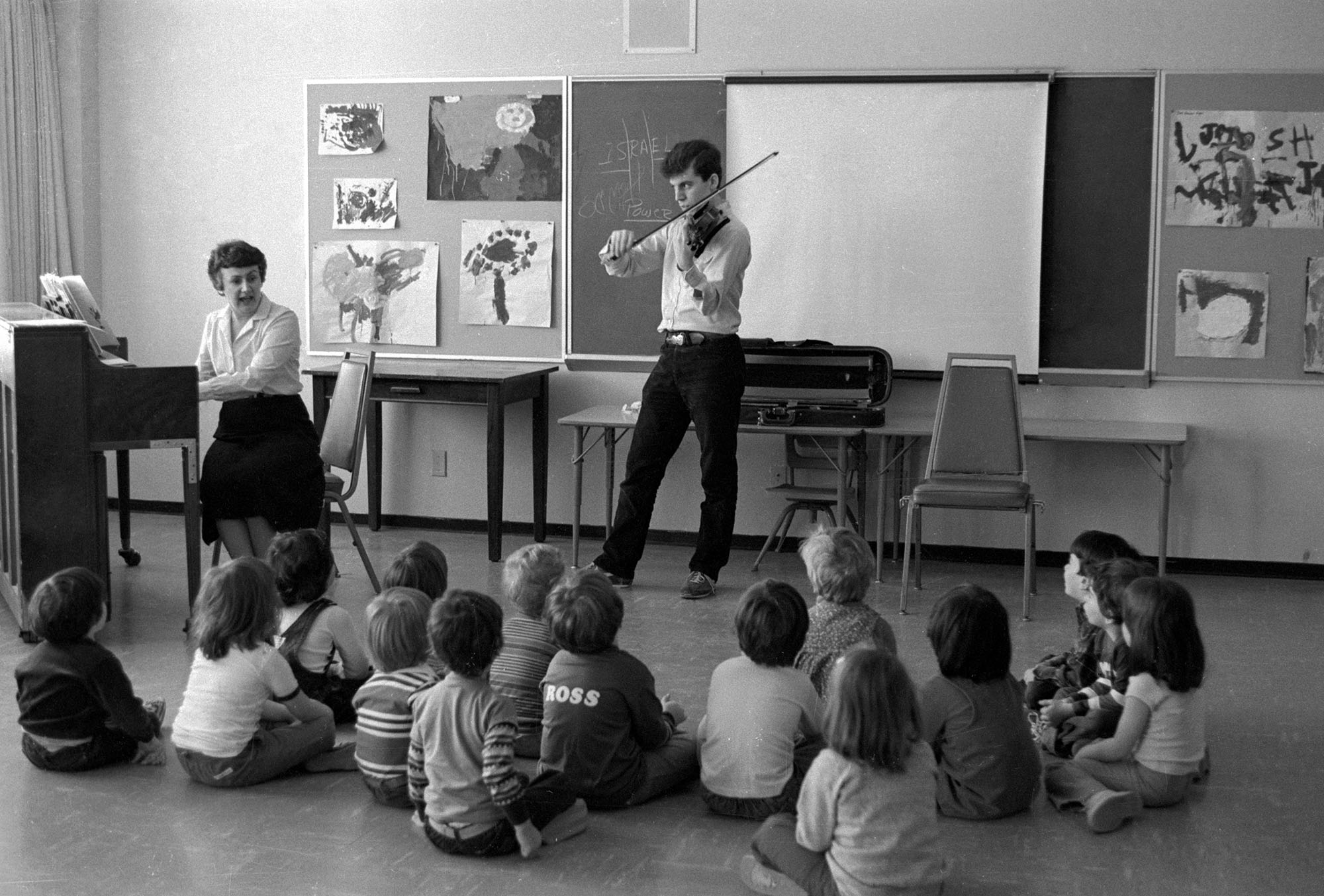
Jessica played in numerous other places, too, not particularly as formal performances. Each nursery school she was associated with (see the Teaching page on this site, for example) benefitted from her breadth of experience as a musician. The image here, for example, shows one of the many years that David came to the nursery school (Temple Israel or Ethical Society) to demonstrate violin as well as play an excerpt of a sonata for violin and piano (or something similar) for the children.
Instruments at home
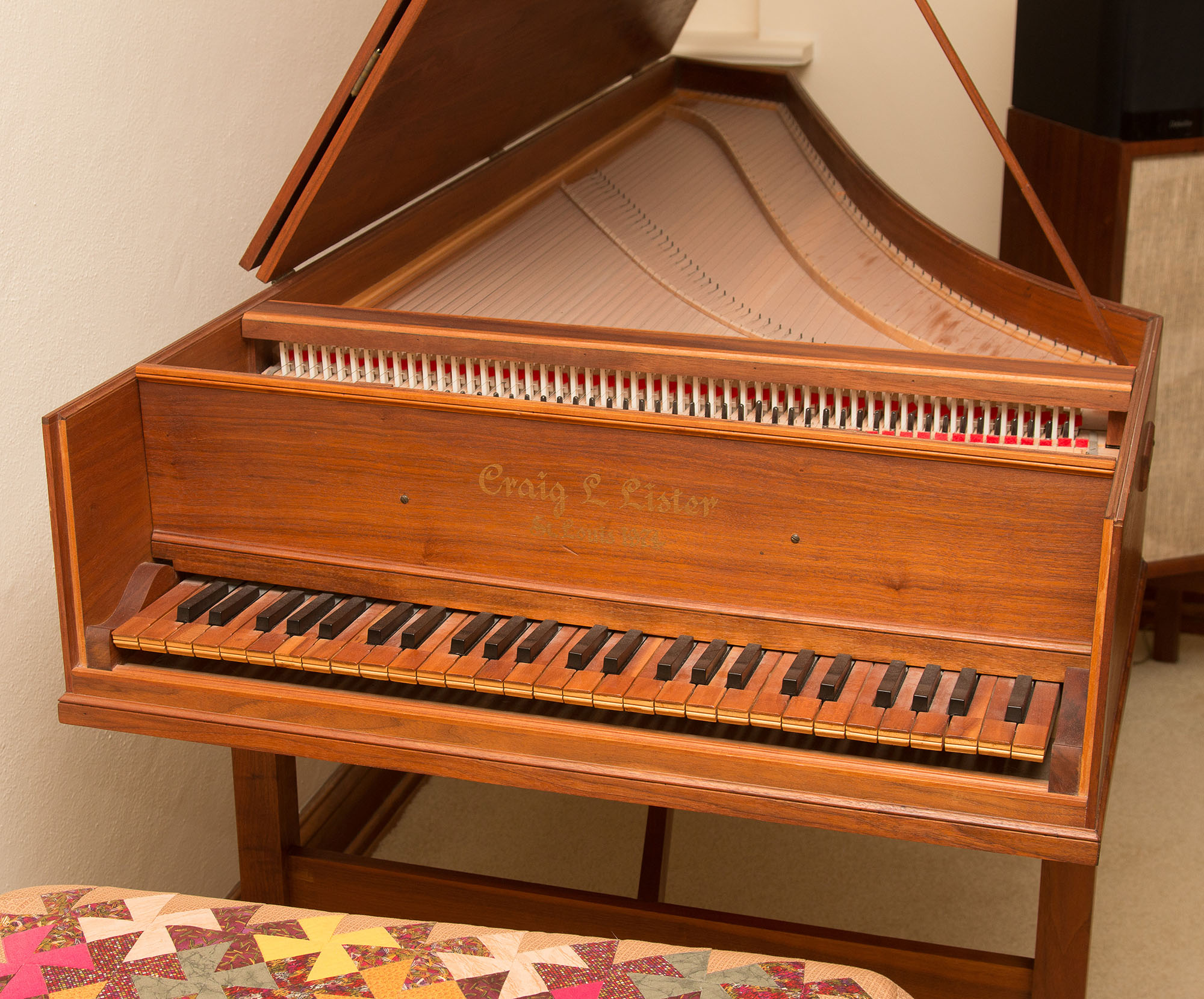
Please see this page for information about her instruments at home (especially pianos and harpsichord).